The Southerner
Misuse of state resources
It is often difficult to identify the precise moment a democracy begins to decline. Democracy rarely collapse with the sound of gunfire or the sight of tanks rolling through the streets. More often, they weaken gradually through the normalisation of practices that should alarm every citizen.
They weaken when institutions established to serve everyone are quietly converted into instruments serving a few. They weaken when public assets become political assets and when citizens become so accustomed to abuse that they no longer recognise it for what it is.
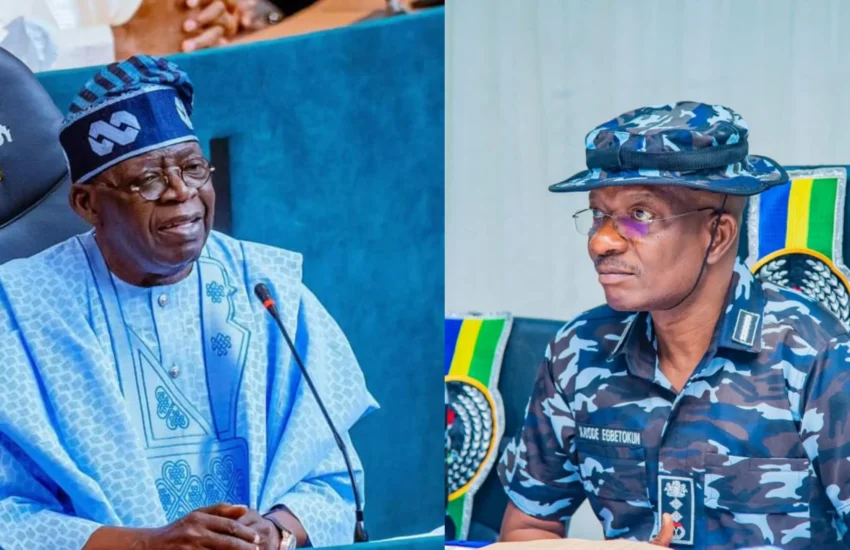
That is why the events of 14 October 2026 deserve serious national reflection. On that day, President Bola Ahmed Tinubu inaugurated the APC Presidential Campaign Council for the 2027 elections inside the State House Conference Centre within the Presidential Villa. Party banners decorated the venue, Party songs echoed through the hall, Party loyalists gathered beneath the authority and symbolism of Nigeria’s most important public institution. Although no official declaration may have stated it directly, the impression created was unmistakable.
The seat of National governance appeared, however briefly, to have been transformed into a platform for partisan political mobilisation.
The Presidential Villa is not simply another government building. It occupies a unique place in Nigeria’s constitutional and political architecture. It is funded through public revenue generated from taxation, crude oil earnings and public borrowing. It is where the President perform constitutional duties on behalf of all Nigerians. It is where Ambassadors present their credentials, executive decisions are taken and affairs of state are conducted.
It is not a party secretariat. It is not the property of the APC or any other political organisation. Its ownership rests collectively with the Nigerian people, irrespective of religion, ethnicity, or political affiliation.
That distinction matters because democracy depends upon a visible and enforceable separation between the institutions of the state and the interests of political parties. Once public institutions begin to wear partisan colours, citizens are left wondering whether their government still belongs equally to everyone. The erosion of that confidence is often the first sign that democratic norms are beginning to weaken.
In the aftermath of the event, Omoyele Sowore articulated what many Nigerians privately acknowledge but often hesitate to say publicly. He argued that public resources should not be deployed for partisan political activities. His position was straightforward. If the APC is permitted to use public facilities for campaign purposes, then every registered political party should enjoy exactly the same privilege.
The statement appears simple, but beneath that simplicity lies one of the deepest contradictions within Nigerian democracy. The issue is not whether one supports Tinubu or opposes him. It is not whether one agrees with Sowore or disagrees with him or It is not fundamentally about the APC. The issue is principle. If democratic rules are to mean anything, they must apply equally to everyone.
At its most basic level, the principle is easy to understand. Government money is not party money. Government houses are not party offices. Government vehicles are not campaign vehicles. Public broadcasters are not propaganda platforms. The moment an individual becomes President or Governor, that person assumes responsibilities that extend beyond party loyalty.
The office holder becomes a Representative of every citizen, including those who voted against him, those who chose not to vote and those who openly criticise his administration.
That is the essence of democratic leadership. Yet Nigeria has gradually normalised a political culture that repeatedly confuses party interest with public interest. Across the country, governors defect from one political platform to another and what should ordinarily remain a personal political decision quickly becomes a publicly funded spectacle.
Government facilities are mobilised, Convoys are deployed, Civil servants are drawn into political theatre, State media organisations provide extensive coverage, even Official resources become instruments of celebration. The invitation may bear the name of a state government, but the event itself communicates partisan loyalty rather than public administration.
This pattern has become so familiar that many Nigerians scarcely question it anymore. That familiarity is precisely what makes it dangerous. Abuse often survives not because people support it, but because they become accustomed to seeing it. What was once exceptional, gradually becomes normal. What was once indefensible becomes routine.
The same tendency is visible during official project commissioning ceremonies. Citizens expect such events to focus on development because the projects being commissioned were financed with public money. Yet what should be civic occasions often resemble campaign rallies. Party flags dominate public spaces, Political slogans overshadow policy discussions, Infrastructure projects become vehicles for electoral messaging. Conversations that should centre on governance are redirected towards calculations about future political advantage. The roads belong to Nigerians.
The aircraft transporting public officials are funded by Nigerians. The security personnel protecting public office holders are paid by Nigerians. State broadcasters carrying these events are maintained by Nigerians. Yet the political dividend frequently accrues to a single party. Public investments become political advertisements. Collective resources become partisan assets.
This concern explains the significance of Sowore’s intervention. Rather than limiting himself to social media criticism, his party formally wrote to the President seeking permission to use the Presidential Villa for its own campaign council inauguration. The request reportedly included logistical arrangements, refreshments and support services comparable to those believed to have been available during the APC event.
The letter was clearly satirical, but effective satire often reveals uncomfortable truths. The underlying question was straightforward. If public facilities are available for campaign activities, why should that privilege be restricted to the ruling party? If the Villa can serve one party’s electoral preparations, why should it not serve every other party as well?
Well, The answer exposes the weakness of the arrangement. Clearly, no democratic government can realistically make state resources available to every political party for campaign purposes. The solution therefore cannot be universal access. The solution is equal restriction. Public institutions should remain public institutions. They should not become instruments of partisan competition, regardless of which party controls government at any particular time.
The issue becomes even more serious when viewed against the framework of Nigeria’s constitutional democracy and electoral laws. The principles governing political competition in Nigeria are neither vague nor accidental. They are embedded in the Constitution of the Federal Republic of Nigeria, the Electoral Act and the regulatory framework established by the Independent National Electoral Commission.
These provisions exist because the architects of democratic governance understood a simple truth: whenever those in power control both the machinery of government and the rules of political competition, democracy becomes vulnerable to abuse.
Section 14(2)(b) of the Constitution provides that the security and welfare of the people shall be the primary purpose of government. Public institutions and public resources therefore exist to advance the welfare of citizens rather than the electoral fortunes of political parties. Every naira appropriated for the maintenance of public institutions is approved in the name of Nigerians, not in the name of a political organisation seeking electoral advantage. Section 15(5) of the Constitution also reinforces this principle by imposing a duty on the state to abolish corrupt practices and abuse of power.
While corruption is often understood in purely financial terms, the misuse of state resources for partisan political gain represents another form of abuse. It weakens accountability, distorts competition and undermines public trust. The Electoral Act also strengthens these constitutional safeguards. Section 95 seeks to promote fairness in political campaigns and electoral competition. Section 97 makes the principle even clearer by providing that state apparatus, including publicly funded media organisations, shall not be employed to the advantage or disadvantage of any political party or candidate. The intention is unmistakable.
The Nigerian state is not supposed to function as a campaign machine for incumbents. The same principle is reflected in INEC’s Regulations and Guidelines for Political Parties as well as its Code of Conduct. Political actors are expected to maintain a clear separation between state institutions and party activities because democracy can only flourish when public institutions remain impartial and when no political party enjoys privileged access to collectively financed resources.
It is against this constitutional and legal backdrop that the controversy surrounding the Presidential Villa must be understood. The concern is not merely about a single event or a single political party. It is about whether Nigeria is prepared to respect the boundaries between state authority and partisan interest. Once those boundaries become blurred, democratic competition ceases to be a contest of ideas, competence and performance. It becomes a contest of access to the machinery of government. That is the larger danger confronting Nigeria today.
A democratic system cannot thrive when one political party appears to campaign from within the structures of government while others are forced to compete from outside them. The Presidential Villa occupies a particularly sensitive position in this regard. Every chair, microphone, air conditioner, security officer, protocol official and utility within that complex is funded through public expenditure approved in the name of all Nigerians. The maintenance of the State House costs billions of naira annually.
Consequently, when that facility appears to serve partisan interests, citizens inevitably begin to question whether the state remains genuinely neutral. Perception itself becomes a political issue because public confidence in democratic institutions depends as much on what citizens see as on what officials claim.
Consider a simple analogy. Imagine a father with four children. One supports the APC. One supports the PDP. Another supports the Labour Party. The fourth supports the AAC. There is one family living room. If the father allows only one child to entertain friends, hold celebrations and consume family resources in that common space while directing the others to rent private venues elsewhere, few people would consider the arrangement fair.
Yet that is increasingly how many Nigerians perceive the relationship between political parties and public institutions. The Villa is simply the most visible example of a wider national problem.
The concern extends beyond a single event because the misuse of public resources has become embedded in our political culture. That reality makes it impossible to dismiss this issue as partisan criticism. The challenge is not who is committing the act. The challenge is the act itself. A principle that applies only when opponents are in power is not a principle at all. Democratic standards must be consistent if they are to retain legitimacy.
Government resources remain finite regardless of political promises. Every naira spent advancing partisan interests through public institutions is a naira unavailable for healthcare, education and development. Citizens often experience the consequences without recognising the connection. A poorly equipped clinic, a neglected rural road or an underfunded public school may appear unrelated to political extravagance, but they are linked by the same question: how should limited public resources be prioritised?
Democracy was never intended to subsidise partisan activity. Citizens pay taxes to fund governance, public services and national development. The diversion of collective resources towards electoral advantage ultimately weakens the state’s ability to meet the everyday needs of ordinary people and perhaps most damagingly, the misuse of public resources erodes trust.
Trust is the foundation upon which democratic legitimacy rests. Citizens must believe that public institutions belong equally to everyone. They must believe that state agencies operate impartially. They must believe that elections represent genuine competition rather than managed exercises designed to preserve existing power structures.
This is why the responsibility of institutions such as INEC becomes particularly important. The Commission was established not merely to conduct elections but to protect the integrity of the democratic process. That responsibility extends beyond election day. It includes safeguarding fairness throughout the political cycle.
INEC cannot afford to become a passive observer whenever questions arise concerning the misuse of state resources in such instance. Its credibility depends upon its willingness to uphold standards consistently. Rules that are selectively enforced cease to function as rules. They become instruments of convenience. An electoral umpire does not protect democracy by remaining silent. It protects democracy by demonstrating that no political actor, regardless of status or influence, stands above the principles governing fair competition.
The broader solution requires more than institutional intervention. It requires a national reawakening among citizens themselves.
Too often, Nigerians view political abuses through partisan lenses. A practice condemned when carried out by opponents is excused when committed by allies. Citizens who rightly criticise one administration sometimes celebrate identical conduct by another simply because it favours their preferred political camp. Such inconsistency weakens the struggle for accountability.
A citizen committed to democratic governance must be prepared to condemn abuse regardless of who benefits from it. The misuse of state resources does not become acceptable because it advances a preferred political objective. Public institutions belong to the Nation, not to temporary occupants of public office.
Moving forward, Nigeria must establish and defend a much clearer separation between state functions and party activities. Political parties have every right to organise rallies, inaugurate campaign councils, mobilise supporters and promote candidates.
Campaigning is an essential feature of democracy. However, such activities should be financed and organised through party structures rather than state institutions.
The National Assembly should strengthen mechanisms that discourage the partisan misuse of public assets. Enforcement agencies must be empowered to investigate violations. Electoral offences must attract meaningful consequences.
Without consequences, democratic norms become optional. Without accountability, even the best laws become decorative.
Ultimately, however, the defence of democracy rests with citizens. Nigerians must become more attentive to how public assets are used in their communities. They must ask harder questions. They must scrutinise official conduct. They must reject attempts to present partisan advantage as governance achievement.
The APC undoubtedly has the right to inaugurate a campaign council. Every political party possesses that right. The issue is not whether the event should have occurred. The issue is where and how it should have occurred. Party offices exist for such purposes. Conference centres can be hired. Private halls can be rented. Convention grounds can be used. Campaign structures can be inaugurated without blurring the line between state authority and partisan interest.
The Presidential Villa belongs to every Nigerian. It belongs to Christians and Muslims, Northerners and Southerners, APC supporters and opposition supporters, voters and non voters alike. It remains one of the few national institutions that symbolically belongs to everyone. When such an institution appears to favour a single political interest, citizens begin to feel like strangers within their own republic.
The issue is therefore about more than one inauguration ceremony. It is about democratic culture, It is about constitutional accountability, It is about protecting the distinction between state power and party power. Most importantly, it is about preserving the principle that government exists to serve citizens rather than political organisations.
I do not make this argument because I hate the APC. Neither do I make it because I agree with everything Sowore says. Like many Nigerians, I have friends across political divides. I criticize it because I believe Nigeria is bigger than any political party and more important than any electoral cycle.
Nigeria’s democracy will not be preserved by election technology alone. It will be preserved when citizens insist that public institutions remain public, when political parties are forced to compete on equal terms and when those entrusted with power remember that they are custodians rather than owners of the state. The Presidential Villa was not built for the APC, the PDP, the ADC, NDC or any other political organisation. It was built for Nigeria. The responsibility of ensuring that it remains so belongs to all of us as well.
Related Posts
Who will save the Nigerian boy-child? By Taiwo Adisa