

Sunday Southerner — SPECIAL REPORT
Sunday, April 5, 2026
By Henry Iyorkase in Makurdi
Recent attacks in Nigeria’s Plateau and Benue states have led to over 144 deaths within two weeks in early 2026, driven by suspected herdsmen violence. But the Palm Sunday attack in Plateau’s Angwan Rukuba, Jos late March 2026 that led to the massacre of about 40 has given fresh impetus to the narrative of Christian genocide.

The timing on the Christian Palm Sunday had an uncanny parallel with the Christmas day strike by US President Donald Trump on what he said were terrorists involved in attacks on Christian communities. More remarkably, the attack called to question the veracity of the oft narrative of promoting the persistent killings as farmer-herder clashes.

The Palm Sunday attack prompted the imposition of a 48-hour curfew in the area by Caleb Mutfwang, governor of Plateau State. Attacks in communities like Otobi Akpa resulted in over 40 deaths and 50 houses burnt in a two-week period.
Genesis of the crisis
What started as violent conflicts between Christians and Muslims in the Middle Belt, Nigeria date back to 1948-1953 when an uprising claimed the life of one Mohammed Marwa (Maitatsine) in the town of Tafawa Balewa in today’s Bauchi State and later spilled over to other parts of the North, especially Kafanchan in Southern part of Kaduna State.
But leaders in the Middle Belt fear the conflicts have morphed into a war of conquest and land grab with suspicion that elements in the armed forces are openly sympathetic to the campaign and providing logistics, expertise and military grade weaponry to perpetrators of the deadly attacks in Middle Belt states.
The sustained attacks in Benue State climaxed in the massacre of more than 200 people in Yelwata community in Guma Local Government Area of the State and shocked the world.
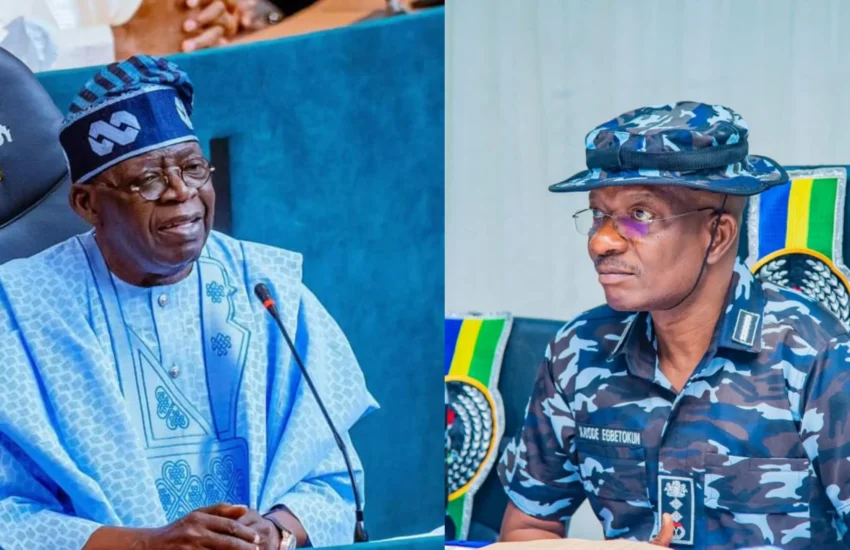
Community leaders across states in the Middle Belt who spoke with The Southerner say James Ayatse, the Tor Tiv and traditional ruler of the Tiv ethnic group that bestrides Benue and Nasarawa states, spoke their minds when he addressed President Bola Ahmed Tinubu at a town hall meeting. The monarch spoke with characteristic boldness and forthrightness at the town hall meeting in Makurdi in the aftermath of the brutal Yelwata killings.
They are unanimous in their verdict that the Tor Tiv succinctly captured the state of affairs in the region.
“Your Excellency, it is not herders-farmers clashes, it’s not communal clashes, it’s not reprisal attacks or skirmishes, it’s a calculated, well-planned, full-scale genocidal invasion and land-grabbing campaign that has lasted for decades,” the Tor Tiv had told the President Tinubu.
At the centre of all are Fulani cattle herders who for decades have roamed the entire zones in Nigeria grazing their cattle. Initially, they were mindful of farms in the communities they got to and avoided destroying crops. In the past 10 years, the herders have become imperious, deliberately setting their cows to feed on farms.
This led to conflicts between the cattle herders and farmers in the numerous communities whose crops were destroyed. The Fulani groups resorted to arming themselves with military grade assault AK-47 rifles and seemingly enjoyed the tacit endorsement and support of the security agencies who turned a blind eye to the open display of the weapons, the kind of which the law prohibits from being in possession of non-state actors.
With armed terrorists embedded in their groups, they wrecked havoc on farmers and communities that sought to prevent the destruction of their farms.
Such was the ferocity of the killings they perpetrated that in 2014, their militia was named the fourth deadliest terrorist group in the world by the Global Terrorism Index.
From Benue to Plateau and Nasarawa, from Kwara to Kogi and Gombe, the militant and well armed groups unleashed a reign of terror, killing, kidnapping, destroying and raping women. They have now graduated into occupying the communities whose indigenous people have been forced to evacuate due to indiscriminate attacks.
The response of security agencies to the attacks are reportedly often delayed and ineffectual as, in most cases,they complain of logistics such as vehicles and lack of adequate fire power.
“It is an unequal conflict with the indigenous people often getting massacred”, Comrade Anza Philips, former chairman of the Benue State Council of the Nigeria Union of Journalists (NUJ) told The Southerner. He does not see the armed forces personnel stopping the killings.
“Rather, the killings in Benue State can only be stopped through direct self help. It is high time communities and even individuals are allowed to carry arms for their safety and protection”, Comrade Philips says.
The feeling that elements among armed forces personnel are aiding the attacks and even actively joining the campaign is prevalent among community leaders in the area. Philips says the terrorists come armed with military assault grade rifles and other sophisticated weapons that they easily overwhelm the few security men that try to confront them.
“Knowing that the communities are defenceless, vulnerable and helpless emboldens them and attack the communities at will. The security operatives who are supposed to protect them are often helpless themselves, Occasionally, their response usually comes late after attackers might have been done wreaking havoc and massacring innocent souls”, the former Benue NUJ chairman said.
A community leader in Plateau State who preferred not to be named blamed the government for what he called its “suspect” attitude to the killings. “First, the federal government keeps calling the killings a farmers-herders conflict. This is deceitful. There is no conflict. It is an outright invasion. The farmers are routinely attacked, killed and the farms destroyed by Fulani terrorists and they brand it conflict.
“I can understand why nothing was done under [former President Muhammadu] Buhari. We know his desire was to get his Fulani kinsmen lands in every state in Nigeria. He couldn’t. But I don’t understand why President Tinubu is doing nothing about it. His asking Benue and Plateau people to live in peace with their neighbours is dubious. Fulani herders have never been our neighbours. They used to come here before, but they never claimed the land or sought to settle on our lands. They just moved on after grazing for a while and they used to do it responsibly”, he said.
How to curbing the attacks
As if on cue, many more communities are being deserted for fear of attacks. The situation is such that the demography of the area may be permanently altered.
The issue of giving states the constitutional power to set up their own Police has gained wide acceptance as Middle Belt leaders now align with their counterparts in the Southern part of Nigeria in seeing state Police as an effective solution to the insurgency. The federal Police seems too detached and encumbered by its command and control structure to simultaneously address security challenges in all parts of the country.
In Benue State, some individuals and groups have tried to stave off further attacks through the efforts of volunteer groups. Vigilanté groups namely Livestock Guards Civil Protection groups and Security Guards and Hunters Association of Nigeria got involved in the task of securing their communities. However, given the inferior arms accessible to them, they could not stand the ferocity and superior fire power of the Fulani insurgents.
In the absence of organised arrangements, some local governments have had to step up and pay stipends to the volunteer groups. But the effort is paltry and ineffective.
The former NUJ Benue council chairman, Comrade Anza Philips believes that in the absence of concerted action by the federal government, the Vigilanté and other volunteer groups activities may not be able to repel the attacks as individuals are not allowed to bear weapons.
“I am optimistic that if they are supported by the government, especially the local governments, they may help reduce the ferocity and frequency of attacks on the communities”, he said.
To a Second Republic Senator, Suemo Chia, who represented Benue North East Senatorial District between 1979-1983, political leaders hold the key to a permanent resolution of the crisis. He blamed nepotism, corruption, neglect of education and lack of promotion of dignity in labour and hard work for the degeneration witnessed in the society today. He noted that desperate politicians seeking power now fan the embers of discord and violence to gain relevance.
A long history of sectarian killings
After the initial 1953 crisis, it erupted again in the 1980s with a serious outbreak of violence between Christians and Muslims in Kafanchan, Kaduna State, in a border area between the two religions. Propagated by extremist leaders. The fight persisted and led to loss of lives and destruction of properties on both sides.
These violent clashes later spread to other parts of Northern Nigeria particularly Kano state when religious riot occurred in 1991 as onlookers disclosed that Evangelist Reinhard Bonnke, a Germany-based preacher was expected to hold a Christian crusade at Sabon Gari stadium.
On the eve of the event, some Moslem fanatics thronged Galadima Road, Sabon Gari chanting ‘Ba ze mu ida ba’, meaning we won’t let the crusade to take place.
Unfortunately, whenever crisis erupts, often at the slightest provocation, anyone seen on the streets wearing a shirt and trousers is assumed to be a Christian and instantly lynched by the mob.

In the ongoing killings in the Middle Belt, the range of attacks were often devastating as the perpetrators used dangerous weapons, including AK 47 rifles Dane guns and, in some cases, machetes to cause mayhem
Similarly, about 40 people were killed by suspected Fulani militants recently at Mangu, Plateau State with many people displaced. About 50 people who sought refuge at Jato Aka are yet to return.
In Kwande Local Government Council, about 50 casualties were recorded, leaving a number of communities deserted as the inhabitants sought refuge elsewhere to escape attacks.
The humanitarian crisis
The killing game has resulted in the removal of persons from their ancestral homes. The Middle Belt today has the highest number of Internally Displaced Persons (IDP) camps. But the sad part is the seeming lack of effort by the government to return victims to their original place of abode.
Only recently the National Population Commission (NPC) talked of going to the IDP Ms to conduct a census. The Independent National Electoral Commission (INEC) similarly spoke of plans to update the national voters register by visiting the camps. But there was no mention of which wards people in the camps will fit into.
The carnage in the IDPs has become overwhelming. The government seems to have abandoned its constitutional role of providing for the welfare of the people. The responsibility has now been taken over by a motley of non-governmental organizations (NGOs) who are unable to meet the daily needs of people in those camps. Definitely, inertia has set in and the humanitarian crisis is unimaginable.
Can Donald Trump help?
The US President, Donald Trump in the wake of the Yiltwada killings condemned what he called a genocide against Christians in Nigeria. Representative Riley Moore of the US Congress has also been at the forefront of calls to halt the killing of Christians. The US army in response to a presidential order has deployed 200 troops to Nigeria. The big question is whether help is actually in the horizon since the killing has not stopped.
Moore, in the wake of the Angwan Rukuba killings has called for greater action against the marauders who are unstoppable for now. But there are fears that the deal signed between Nigeria and the US may have become a clog. Will President Trump brush aside the agreement and directly intervene in the killing game in the Middle Belt? It remains a puzzle what lays ahead for the people in that zone.