



Labour’s stance on N500 per litre for petrol still under review
The three-day nationwide “warning strike” by public-sector workers, scheduled from midnight Friday, October 2, should end by midnight today Sunday, October 4, 2026.
Unusually designed to have minimal effect on provision of public services, it was a low-key response to the object of the exercise – the effect of the astronomical increase in the price of petrol – the main engine for transport in Nigeria.
The Joint National Public Service Negotiating Council (JNPSNC) directed federal, state and local government workers to participate, citing economic hardship, fuel prices, wage demands and the need to begin negotiations for a new minimum wage.
Since February 28, 2026 when America’s Donald Trump launched his unilateral war against Iran alongside Israel’s Benjamin Nathanyahu, global oil supply has been unended with the choke hold on Strait of Hormuz, a vital artery for the delivery of 20% of global oil supply by the Mullahs that run the Islamic Republic of Iran.
This time, organised labour appears highly mobilised and increasingly determined, but the situation is more nuanced than simply saying a nationwide strike is inevitable.
The immediate evidence is significant:
The JNPSNC, representing eight public-sector unions, demanded that petrol prices be reduced to ₦500 per litre, that government approve a wage award, and that negotiations for a new minimum wage beginning in 2027 should commence.
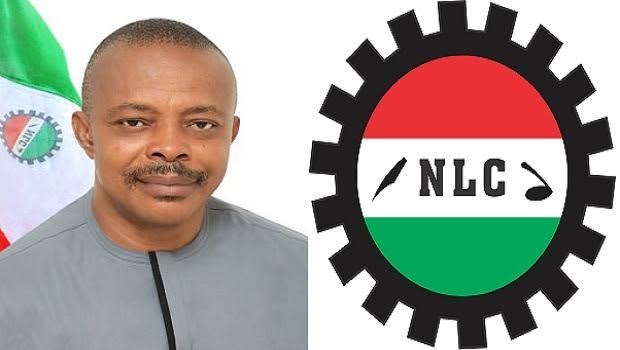
The NLC has backed the public-sector unions’ position, indicating that the issue is not confined to a small group of workers.
In its September 30 statement, the NLC said the existing ₦70,000 minimum wage had already been eroded by inflation and called for a tripartite committee to begin work on a new wage framework for 2027. It also demanded an immediate reduction in petrol prices and a nationwide wage award.
Federal workers have also expressed support for the demand for cheaper petrol and a living wage, with their representatives saying they were prepared to support industrial action.
The present dispute combines two issues that directly affect workers’ daily lives: the cost of transportation and the purchasing power of wages. Petrol prices reported at around ₦1,450 or more per litre in major cities have translated into higher transport, food and other living costs, according to the NLC.
This makes the minimum-wage demand more than a conventional wage negotiation. Labour’s argument is essentially that even a nominal increase in wages will provide limited relief if petrol and transportation costs remain extremely high.
There is also a timing factor. The current ₦70,000 minimum wage was agreed in 2024, with a review mechanism after three years – 2027. Labour is therefore pressing for negotiations to begin now rather than waiting until the deadline approaches.
But there are limits to labour’s leverage.
The key question is whether the different labour organisations can maintain unity and sustained participation if government opens negotiations or offers partial concessions.
Historically, Nigerian governments and organised labour have often reached agreements after threats of industrial action, resulting in strikes being suspended or postponed. For example, the NLC and TUC suspended a planned indefinite strike in October 2023 after reaching an agreement with the Federal Government on measures intended to cushion the effects of petrol-subsidy removal.
That history means the present mobilisation should be viewed as serious bargaining pressure, rather than assuming that every ultimatum will automatically culminate in a prolonged shutdown.
Overall, the determination is substantial. The combination of high petrol prices, declining real wages, the approaching minimum-wage review and support from public-sector unions gives labour a broad economic grievance.
The decisive test will be whether the NLC, TUC and affiliated unions maintain a united position if the government offers partial concessions.
In practical terms, a short warning strike is a credible instrument of pressure; sustaining a prolonged nationwide strike would depend heavily on labour unity, public-sector participation and the government’s response.