The Southerner
FRONTROW
During the 2016/2017 recruitment into the Department of State Services (DSS) when 471 young men and women were recruited after a nationwide exercise, 51 cadet slots were reserved for Katsina State, home state of late Muhammad Buhari, Nigeria’s president at the time. It was the single largest share of any of the 36 states, larger than the combined 44 recruits for the entire South-East as well as the 42 for South South geopolitical zones. At the end of the exercise, the Northwest got 165 cadets, including Katsina State’s 51.
The Northeast got 100 slots and North Central got 66 cadets.
In the Southwest, 57 cadets were taken from the zone, South South was allotted 42 cadets while 44 came from South east.
After a rigorous exercise that spanned nearly two years, the Nigeria Customs Service recently concluded the recruitment of various cadres of cadets after 573,680 applications were received.
From the 3,927 approved vacant positions, 3,852 candidates were successful and have begun statutory training at various colleges and locations.
On October 23, 2026, the Federal Character Commission (FCC) held a press conference where it called for the immediate suspension of the Customs recruitment exercise over alleged violations of federal character principles. Announcing the FCC stance, Abdulwasiu Bawa-Allah, Chairman of FCC’s Financial Services Committee, said allegations surrounding the recruitment exercise required investigation, adding that the constitutionally mandated commission was not invited to monitor the recruitment exercise.
Buwa-Allah did not make any allegation of lack of fairness or adherence to the principle of Federal Character during the recruitment.
Rather, the closest he came to saying anything of substance was his observation that some applicants who had earlier been shortlisted did not make the final cut after the physical verification in Abuja.
Unfortunately for the FCC, the Customs had earlier acknowledged the complaint of the 397 applicants who were screened but not invited for formal training.
The Service said the complaint of the affected persons is being treated on case by case basis. Bawa-Allah had alleged that the FCC was not involved in the process, but acknowledged that the management of Customs had started addressing the individual complaints.
So, why did the FCC go for the weird call that the recruitment be suspended even when shortlisted cadets had been undergoing training for some weeks already?
The Federal Character Commission was initially set up by Decree No. 34 of 1996 (the Federal Character Commission [Establishment, etc.] Act) during the military regime, and it is currently anchored and recognised under Section 153(1) and the Third Schedule (Part I, C) of the 1999 Constitution. I
Its primary objectives are to promote national unity, prevent domination, reduce marginalisation and ensure inclusiveness in recruitment and promotions in federal agencies and establishments. But under Lawal Daura also from Katsina State with Buhari as Director General of the DSS, the brazen and unlawful disregard of the principles of fairness and representation the FCC was the default approach. And it is not like Nigerians did not cry out. The DSS heist was not an isolated case.
Critics pointed out that both President Muhammadu Buhari and the then-Director General of the DSS, Lawal Daura, hailed from Katsina State with civil society groups like the Human Rights Writers’ Association of Nigeria (HURIWA), lawmakers like Senator Ike Ekweremadu, and various media reports condemned the exercise as a violation of the constitutional federal character principle.
The presidency at the time defended the skewed distribution of the slots, arguing that the figures were analysed out of context and intended to address historical imbalances in federal service representation. It was acceptable to Abdulwasiu Bawa-Allah and his FCC as they kept mum.
The just concluded recruitment by the Customs was an exercise conducted with an unusual display of equality, transparency and fairness. All the 36 states had equal slots of 35 cadets for the superintendent cadre. The dubious call for the suspension of an already concluded recruitment that demonstrated a show of fairness and equality should elicit a further examination of the activities of the FCC.
At the time of its establishment in 1996, Malam Adamu M. Fika was appointed the pioneer chairman. Afterwards, there was a succession of chairmen all from the North with the secretary also from the North on some occasions.
Dr. Shettima Bukar-Abba was appointed chairman in January 2016 to succeed Alhaji Muhammad Bello Alkali following his demise.
Then there was Dr. Muheeba Dankaka who was appointed Chairman in 2020 by President Muhammadu Buhari at a time Mohammed Bello Tukur’s tenure as secretary of the commission was extended in 2021. This had sparked public debate regarding zonal representation between the chairman and secretary positions.
At the time of its establishment in 1996, the FCC had lofty ideals to ensure that every component part of the country – state and ethnic group no matter how small – is not left out of the Nigerian project. Unfortunately, the FCC has progressively morphed into an agency for reinforcing the atmosphere of dominance and exclusion it was supposed to prevent. Abdulwasiu Bawa-Allah could not stand the pivot towards fairness and openness.
He could not levy accusations of unfairness. The only thing he could point to is that his agency was not consulted during the recruitment. For him, that is enough to cancel the entire exercise. He forgot that the Nigeria Customs Service has a governing board headed by a Minister and is supervised by a Federal Ministry.
It is obvious the entrenched interests in the FCC have got so cozy that they could combat any effort to adhere to the objectives for which it was established and which it has wantonly opted to subvert.
Charles Emetulu at 60
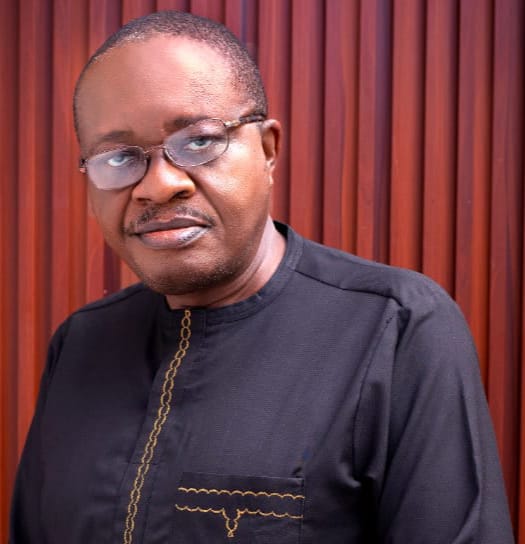
Hon. Charles Chukwuemeke Emetulu, member representing Ndokwa West Constituency in the Delta State House of Assembly was 60 years on October 26.
As a lawmaker and politician he stands out through his commitment to education, community development, and effective representation. As a lawmaker, he has demonstrated a strong interest in improving the lives of his constituents.
One of his distinguishing qualities is his investment in educational infrastructure. His reported interventions include classroom construction and renovation, science laboratory rehabilitation, and the provision of learning facilities in schools across his constituency.
As Chairman of the House Committee on Education, he has also contributed to discussions and initiatives aimed at strengthening the education sector.
Beyond education, Emetulu emphasises grassroots development, youth empowerment, and responsible representation. His approach reflects an understanding that leadership should translate into tangible benefits for the people.
Happy birthday, my beloved brother.
Related Posts