

The Southerner — OPEN EYES
Thursday, April 30, 2026
There are deaths that shake a nation to its core not because they are the first of their kind, but because they strip away every pretense that justice and safety are equally distributed among citizens. The killing of Abdulsamad Jamiu, a 24-year-old NYSC corps member, Civil Engineering graduate, Qur’anic teacher, and beloved son of Engr. Sani Jimoh, in the early hours of Saturday, April 26, 2026, and the broad daylight execution of 28 years old man named Mene Ogidi on the streets of Effurun, Delta State on April 27th, 2026, are such deaths.
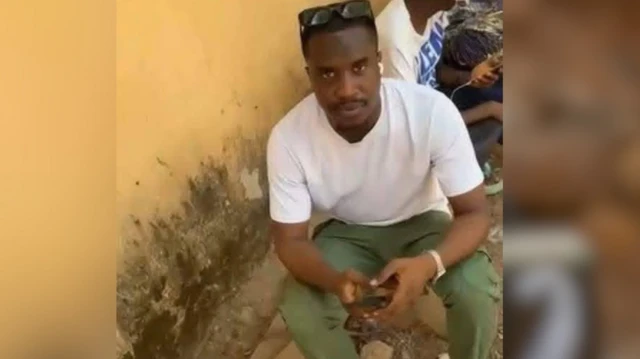
Shot through the closed door of his own room in the Dakwa community of Abuja, while reportedly asking “who is there, who is there,” Abdulsamad, known fondly as Kesh, was just one month away from completing his national service.
He had been retained by his place of primary assignment. His Passing-Out Parade was scheduled for next month. He was, by every measure, doing everything right. And then soldiers came in the night, and he was gone.
The Nigerian Army’s account of events strains credulity and collapses entirely under the weight of physical evidence. The Guards Brigade Quick Response Group claimed that troops, responding to a distress call about armed robbers, came under fire from fleeing suspects and that Jamiu was tragically caught in the crossfire.
This narrative, however convenient, is directly contradicted by the facts on the ground. The bullet hole in Abdulsamad’s wooden door runs from the outside inward, a trajectory consistent only with a shot fired through a closed door at a man inside his own room.
No weapon was recovered from the scene. No shell casings belonging to any party other than the military have been documented. No robbery was independently reported in the community that night. The soldiers entered not through the main gate, which remained intact, but by scaling the rear fence and destroying the barbed wire, a method of entry wholly inconsistent with a legitimate rescue operation.
The Army’s own visiting delegation, led by Brigadier S.O. Buhari, later admitted they had been “unaware that the house was fenced” and that the room was located downstairs, a startling admission that their earlier “crossfire” account was built on a foundation they themselves had not properly investigated.
The possibilities surrounding the soldiers’ intent are deeply troubling and cannot be dismissed with the word “mistake.” At minimum, this was a catastrophic failure of rules of engagement; trained soldiers entering a private residential compound, firing through a locked door at a man who was merely asking who was there, and then allegedly directing community vigilantes to mop up the blood before police arrived.
This is not the behaviour of troops acting transparently in the public interest. It is the behaviour of men attempting to erase a crime scene. At worst, and the bereaved father himself has voiced this suspicion; someone may have sent those soldiers to that specific house with a specific purpose. Whether this was a targeted killing disguised as a security operation, a reckless act of state violence born of absolute impunity, or a catastrophically negligent operation carried out by soldiers drunk on unchecked authority, the outcome is the same: an innocent young man is dead, and those responsible are hiding behind institutional language and the word “investigation.”
The pain that Engr. Sani Jimoh and his family carry is the kind that no parent should ever be asked to bear and the manner in which it was delivered makes it exponentially more cruel. Jimoh was in Okene when his daughter Farida called him in the dead of night to tell him that soldiers had killed her brother. He could not hold his son’s hand. He could not be there. He had to negotiate, through grief and shock, with the very institution that had just taken his child’s life begging them to return the body for burial.
He was made to sign an undertaking before his son’s remains could be released, effectively forced to choose between burying his child according to Islamic rites and fighting for justice. That a father had to make such a choice, that the state placed such burden upon him in his rawest moment of grief is an act of institutional cruelty that must be named plainly.
And then there is the unbearable detail reported by a child in the home; that she heard Abdulsamad ask “who is there, who is there” before the gunshots came. His last words were a question. A reasonable, human, terrified question. And the answer he received was a bullet through his door.
Abdulsamad Jamiu was not a statistic. He was a young man who had built a life of quiet excellence, brilliant enough to be named among the best students his Islamic school ever produced, disciplined enough to distance himself from friends who smoked, generous enough to teach the Qur’an with a voice so beautiful that strangers approached him in the mosque and asked to be his students.
His cousin remembered him making rounds to say goodbye to everyone the night before he died; a farewell so unusual that they laughed about it, and that now reads, in retrospect, like something sorrowful and sacred. He dreamed of joining the Nigerian Army.
The army killed him instead. His father, in an act of grief so raw it is almost unbearable to read, asked the soldiers to fulfill his son’s wish by enlisting one of his younger brothers, an act I do not consider as patriotism but cowardice. You don’t join hands with your tormentors!
That a father could still reach for something redemptive in that moment of devastation speaks not to resignation, but to a dignity that the institution that killed his son has done nothing to deserve.
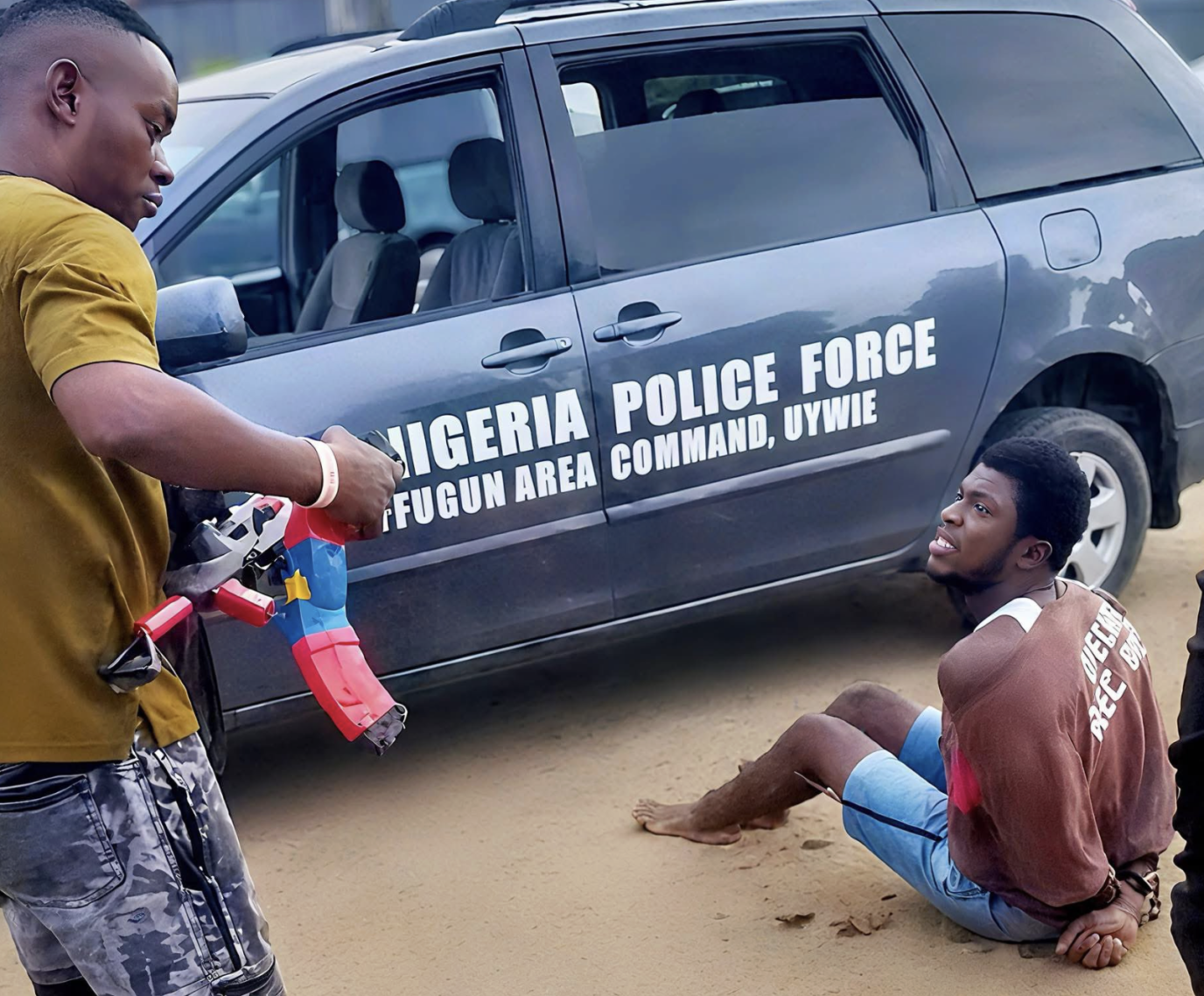
While the escapades of Jamiu’s uniformed murderers were being interrogated across the country, on the same week, ASP Nuhu Usman of the Nigeria Police Force knelt beside a bound, begging, 28-year-old man named Mene Ogidi on the streets of Effurun, Delta State, and executed him in broad daylight before a crowd of witnesses. In a video that has been trending across social media, Ogidi is seen sitting on the ground with his hands tied behind his back before being shot by an officer in mufti. He was begging. He was restrained. He was not a threat to anyone.
The Delta State Police Command’s own spokesperson later acknowledged this starkly, noting that Ogidi was “a suspect who is already tied to his back, a suspect who was begging for his life.”
These two deaths separated by hundreds of kilometers, different uniforms, and different institutional cover stories, are in truth one story; the story of a Nigerian state that has granted its security forces the informal, functional authority to determine on the spot who lives and who dies, without consequence, without oversight, and without apology.
Both men were young. Both men were unarmed at the moment of their deaths. Both men were pleading. Neither man received the most elementary protection the Nigerian Constitution promises every citizen: the right to life, and the right not to be deprived of it except by due process of law.
That is not the failure of one trigger-happy officer. That is the yield of a culture. Nigeria cannot continue to bury its young people and call it security. Abdulsamad Jamiu was one month from completing his national service. He dreamed of joining the Nigerian Army. Mene Ogidi was 28, begging for his life on his knees, insisting he had been sent by a friend and knew nothing.
Whether or not either man had ever done a wrong thing in his life is entirely beside the point because the Nigerian Constitution does not permit execution as a substitute for investigation, and no officer of any security force has the legal authority to serve simultaneously as judge, jury, and executioner on a public street or through a civilian’s bedroom door.
The clarion call arising from these twin tragedies must be threefold and uncompromising; first, full criminal prosecution (not merely internal disciplinary proceedings) for every officer involved in both killings, because Force Order 237 and military courts-martial conducted within the same institutional culture that produced these killings cannot substitute for civilian judicial accountability; second, urgent legislative action on state policing, so that the communities of Effurun, Warri, and Dakwa are no longer policed exclusively by federal officers answerable to ‘Ogas’ in Abuja alone, with no accountability to the people they walk among; and third, a national commitment backed by law, not the usual rhetoric, to the principle that every Nigerian, regardless of the suspicion against them, regardless of the uniform standing over them, deserves to be taken to a station, charged before a court, and tried before a judge.
Mene Ogidi said he would carry them to the place. Abdulsamad Jamiu asked who was there. Neither man got an answer that honoured his humanity. Nigeria owes both of them and every family waiting to hear such a knock in the night far better than this. If Boko Haram and bandits continue to maim us, our political oligarchs continue to gamble with our lives, and the people in whom our security are entrusted with have decided to turn their guns against us, then what is the fate of an ordinary Nigerian?
Weep, my beloved country. May the sun shine tomorrow…