
(Published by The Southerner, Sunday, April 27, 2025)
At the dawn of the war of extinction of Yugoslavia in the nineties, many of the citizens of the Baltic nation did not see the imminence of war or the tragic outcome, which was the most severe theatre of atrocities in Europe since World war 11. It began with politicians beating the drums of ethnic pride, deriding their neighbours and fellow citizens in the socialist list state, for who they were or perceived them to be.
The campaign against each other was insidious, vile and destructive and soon, it became a campaign for ethnic groups and against the state. The socialist Republic of Yugoslavia was led for decades by Josip Broz Tito, an international statesman and one of the founders of the non-aligned movement and a major supporter of the African liberation movements. Tito had succeeded or so it seemed, in bringing together disparate and diverse groups together to form a nation which could not be defeated by Nazi Germany.
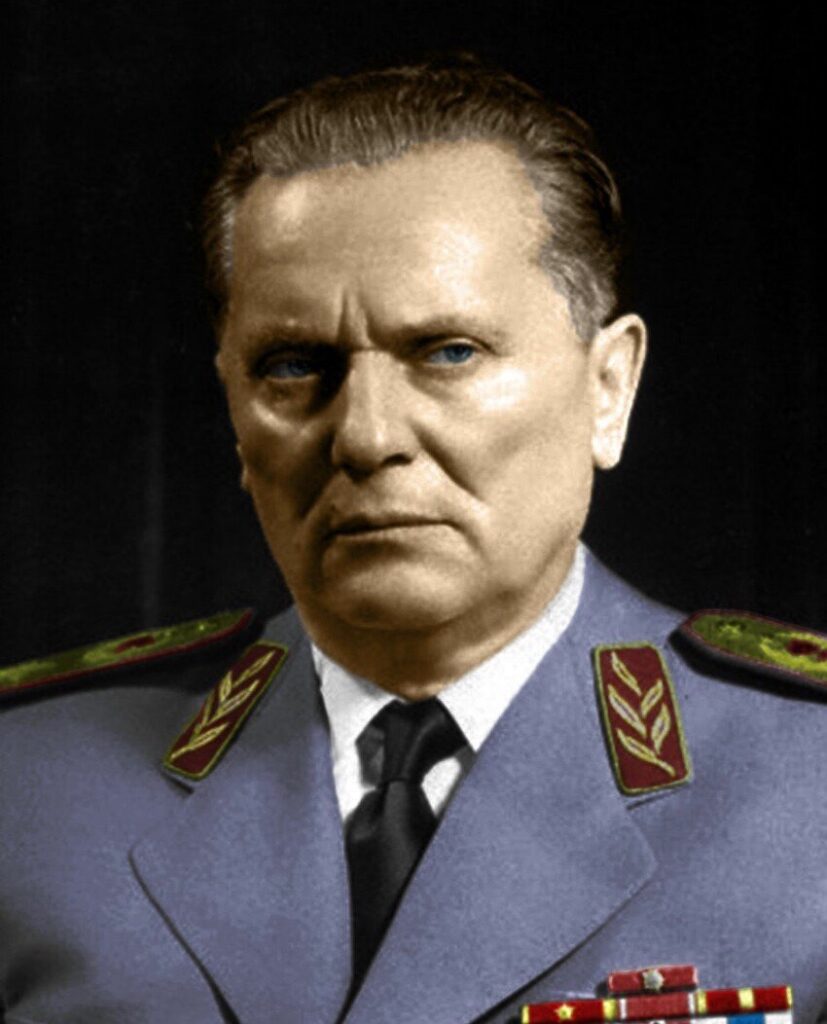
At the death of Tito, the politicians began to move away from the Socialist path and Titoism. They began to revive ancient disputes, protecting ethnic cultural values and distinctiveness. As a Yugoslav prominent actor Boro Todorovic recalled:
Said he: “All of us have had, now and then, a terrible, horrifying dream, a nightmare, from which we wake up in the middle of the night or at dawn bathed in sweat from the terror we have experienced. We overcame our joy to find that it was only a dream and not reality. Sadly, what is happening around us today, this horror, this chaos on our soil, in the heart of Europe, at the beginning of the twenty-first century, this destruction, the killings, this hatred – this, alas, is no dream but a living nightmare.
“It is all so unreal, so inconceivable, that it is hard to grasp, at least for me. It leaves me quite unable to judge what is going on or to adopt a rational attitude towards it. It really is like that dream, that ugly nightmare. To what end, and in whose name, I ask myself (you probably do the same), this senselessness? Don’t count on me. I won’t go along with you. You won’t teach me to hate anyone. And, to tell you the truth, the more you call on me and remind me of my ethnicity, the less I feel I belong to it. The more you appeal to my patriotism, the less patriotic I feel because of you. There you have it. That is my stand”.
As the world later had to grapple with the conflicts in Yugoslavia, things went out of control. The outcome was genocide, war crimes and crimes against humanity. Yugoslavia disintegrated and disappeared. The fate that befell that nation could have been averted, but that is now history. The lessons of that tragic history will be learned by diverse and divided entities like Nigeria in the easy or hard way.
Many Nigerians who feel disappointed with the failure of our past leaderships, to unite our people, to build a common national aspiration and unfulfilled prospects in nation building since independence, have often blamed the ‘’forced union of disparate peoples by Lord Lugard in 1914, or what is mischievously referred to as ‘’the mistake of 1914’’ for the intractable problems that have engulfed the country.
They fail to understand that most nations of the world evolved through the so-called artificial process of creation and with the will and determination of its people, they forge a common identity and build a nation of their dream. People shape their identities and manifest destinies.
Beyond the myths and legends of the evolution or creation of nation-states as they are called, is the more critical point of how people see or identify themselves; these cannot be imposed or invented. It must come from within, drawn mainly from images and semiotic symbols familiar to the people.
The infinity of cultural, ethnic, socio-economic and other factors that influence state formations, shape national identities, and mold societies cannot be traced to foreign influences alone. It is eternally within the people. One cannot rule out the involvement or influence of foreign invaders and colonizers who come with their agenda and culture, but this does not invalidate the feeling of oneness of the people or the nation’s evolution in whatever shape or form of its historical antecedents and identities.
The role of the invaders cannot be discounted, but how the people adapt to foreign influences and their capacity to embrace their culture and the culture of their neighbors, while sustaining their culture gives them that unique identity and exceptional profile as one nation.
Although our history was written for and about us by the British, our colonizers, we have failed to refute the narrative told by the conqueror which often becomes the official history. Many Nigerian historians who were educated as British-protected scholars accepted their protector’s version of history, recycling them in every academic journal or book written to satisfy their British teachers, without properly interrogating the information handed to them or making serious independent efforts to investigate the facts.
Even where it was clear from the oral tradition and common sense that the British versions were fraudulent, self-serving, or wildly exaggerated, the scholars stuck with the British version. In secondary schools. We were taught that Mungo Park discovered the River Niger and that Lord Lugard founded Nigeria. In this British version of history, we were taught that we are an artificial creation and because we were a mere geographical expression, we were a people without antecedents who did not know each other but were brought together and introduced by the British in their benevolence, to save us from our fetish-strewn past as pagans, heathens, cruel, barbaric and crude people who needed Britain to civilize us and according to their religion, to pave the way for us to enter paradise.
Yet at the time Britain was being patched together, Benin was a multi-ethnic state with citizens drawn from Benin, Igbo, Esan, Afenmai, Isoko, Urhobo, Itsekiri, Ijaw and Yoruba. More than two hundred years before the arrival of the British, the Benin Empire had expanded to areas as far away as the Benin Republic and had established military garrisons in Lagos to the south-west and Agenebode on the northern bank of River Niger, and had trading and diplomatic relations with Portugal.
The Oyo Empire had been constituted of multi-ethnic citizens comprising Yoruba, Ebirra, and Nupe. The Kanem Bornu Empire was already thriving with Kanembus, Shuwa, and Kanuris cohabitating, with the majority worshipping the same Allah.
Also, the Sokoto caliphate had brought together seven Hausa states, the Yoruba city of Ilorin, and Tuaregs, and its influence extended to Cameroon. The Sokoto caliphate, one of the largest pre-colonial states in Africa, was consolidating its conquest of Northern Nigeria and territories in the central part of Nigeria, with its march into Benin territory halted only by Benin soldiers at Afenmai.
Another bogey sold by British colonial hagiographers was that Britain invented democratic values, ethos, parliamentary government, and the rule of law. But a close examination of the system of government and social relations in many pre-colaonial states in Nigeria shows that even in communities that were not as organized as Benin, Oyo, or Sokoto, the basic rules of social relations such as hearing from all parties (fair hearing) before judgment existed .Our people had no difficulty in understanding basic democratic norms and practices like respect for rules, law, order, voting in an election, the importance of elections, the concept of participation, society, leadership, followership, transparency and accountability.
As we look forward to the next exercise of electing leaders in 2027, the voices of politicians who see leadership as their birth right or the same mindset of divine rights rule, the do or die partisans, the failed arguments about the North must rule forever or the South must rule even if heaven falls, are growing louder and more strident. Many of these politicians barnstorming are convicted felons or those being investigated by the EFCC and more likely to go to jail if justice is served.
They have started traversing the political landscape even when hunger, insecurity, poverty, inflation, lack of jobs for the army of graduates, with hundreds of thousands of fellow citizens languishing in internally displaced camps or as refugees abroad. And the nation faces existential threats.
The problem we have today which we must confront boldly is how to understand ourselves better and build a consensus on how to restructure our country to achieve good governance and consolidate democracy, instead of the heavy doses of prejudice, discrimination, lack of respect for each other and our utter failure to love our neighbors as ourselves. We must never again take our selves for granted by thinking that we would escape the worst case scenario as we have witnessed in the destruction of Syria, Iraq, Libya ,Yemen and even the disappearance of a potentially strong state like Yugoslavia and a super power- the Union of the Soviet Socialist Republics USSR.
We can avoid this tragic fate by understanding our strengths and weaknesses, leveraging our strengths to our mutual advantage as we seek to develop and modernize our country. I believe in the future of Nigeria because I am a Nigerian.