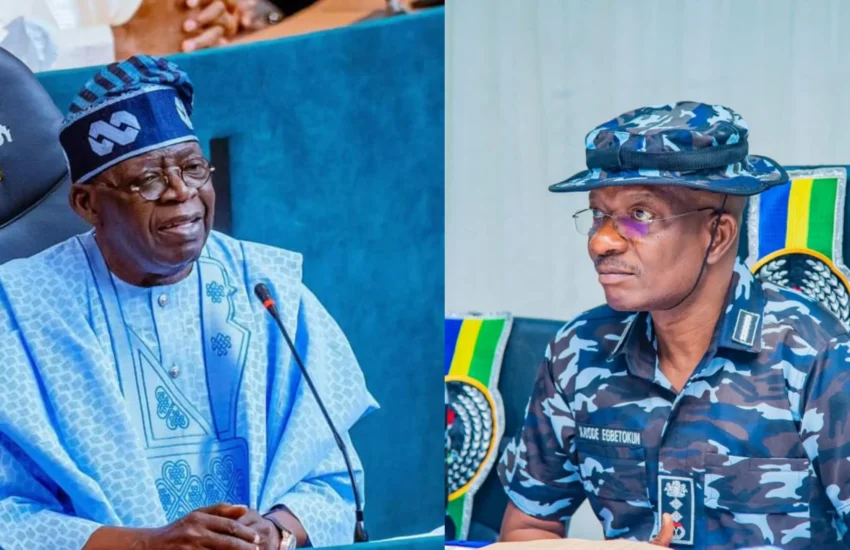
The Presidency and the Defence Headquarters have moved to clear the controversy trailing the reported killing of Abu-Bilal Al-Manuki, the Islamic State-linked commander recently neutralised in a joint Nigeria–United States military operation.
The clarification followed public questions over earlier reports suggesting that the same terrorist commander had been killed in a previous Nigerian military operation in 2024.
Al-Manuki, also identified in some official references as Abu-Mainok or Abu-Bilal Al-Minuki, was announced killed after a Nigeria–U.S. counterterrorism strike on May 16, 2026.
United States President Donald Trump described him as the global second-in-command of ISIS and said the operation was executed by “brave American forces and the Armed Forces of Nigeria.” Reuters also reported that President Bola Tinubu confirmed the strike and described it as a significant example of security cooperation against terrorism.
However, the announcement quickly triggered debate after some Nigerians recalled that a person bearing the same name had previously appeared on lists of terrorist commanders reportedly killed during military operations in 2024.
Reacting to the controversy, the Special Adviser to President Bola Tinubu on Information and Strategy, Bayo Onanuga, said the earlier report was not proof that the latest operation was false, but a case of mistaken identity or misattribution in the heat of sustained counterinsurgency operations.
According to the Presidency, security officials have now clarified that the Birnin Gwari forest axis in Kaduna State, where the 2024 operation reportedly took place, was never within Al-Manuki’s established operational area. That, Onanuga said, made the earlier assessment inaccurate.
“Security officials now clarify that the earlier listing was a case of mistaken identity or misattribution in the fog of sustained counterinsurgency operations,” Onanuga stated.
He added that the latest operation was not rushed, but followed months of intelligence work, including Intelligence, Surveillance and Reconnaissance, ISR, communications monitoring and phone intercepts which reportedly began in December 2025.
The Presidency further disclosed that security agencies initially planned to capture Al-Manuki alive. That objective, according to the clarification, explained why he was reportedly tracked across several locations, including Abuja and Maiduguri, before the final strike was authorised.
Onanuga said the final operation was approved only after multiple layers of verification had been applied, stressing that the authorities were fully confident about the identity of the target.
The Defence Headquarters also addressed the controversy, explaining that the confusion was partly caused by the use of similar names and aliases among ISWAP and Boko Haram fighters operating across the North East and the Lake Chad Basin.
According to the military, such name similarities are not unusual among terrorist elements and are sometimes deliberately used to obscure identities, confuse intelligence records and complicate public reporting.
The DHQ, in the statement signed by the Director of Defence Information, Major General Samaila Uba, maintained that the Abu-Bilal Al-Minuki killed in the May 16 operation was positively identified through human intelligence and technical surveillance as a senior operative within the Islamic State network.
The military also linked the neutralised commander to international terrorist financing and coordination across the Sahel, describing the operation as a major milestone in Nigeria’s counterterrorism campaign.
The Armed Forces insisted that there was “no ambiguity” regarding the identity of the terrorist killed in the latest strike and urged the public and the media to rely on official communications in order to avoid confusion created by name similarities.
For the Presidency, the controversy appears to have exposed the difficulty of communicating success in a war where aliases, battlefield claims, mistaken identities and delayed verification often overlap.
But the central message from Abuja is clear: the man killed in the latest Nigeria–U.S. operation was not a recycled casualty from 2024, but the actual Al-Manuki, whose identity, according to government and military officials, was established through prolonged intelligence tracking before the strike.
The clarification is also significant for Nigeria’s security diplomacy. Trump’s public acknowledgement of Nigerian military cooperation gives the operation an international profile, while Tinubu’s confirmation projects Abuja as an active partner in the broader campaign against Islamic State-linked groups operating across West Africa.
Still, the controversy shows why official transparency remains critical in counterterrorism reporting. In a country where citizens have seen repeated claims of terrorists being killed only for similar names to reappear later, the public demand for explanation is not entirely misplaced.
What the Presidency and DHQ are now saying is that this time, the evidence trail is different, the intelligence process was deeper, and the identity of the target was verified before the final strike.