JUSTICIA on The Southerner Newspaper
Sunday, August 31, 2025
The Midwest Region, created in 1963 from the Western Region, was the first and only sub-national entity created democratically in Nigeria. The region, which was later renamed Bendel State, was famous for leading other regions in sports, and the reason for this was quite simple, it took sports seriously.
To those of us who grew up as Midwesterners or Bendelites, the sporting activities, right from primary schools, were a way of life, and schools with the most prominent sportsmen and women became famous and a source of pride to the students, parents, and the community.
From boxing to football, swimming, and athletics, Bendelites came top. Bendel Insurance football club competed at the Division One (now the Premier League) with Rangers International of Enugu and IICC Shooting Stars of Ibadan.
The Ogbe Hard Court in Benin City was (I stand to be corrected) the only international lawn tennis tournament in Nigeria, and it was no surprise when the Golden Eaglets won the Under-15 World Cup in China, and almost all the players had been picked from Bendel State, because eleven of the golden boys were Bendelites.
In sports management, Abraham Odia, who rose to the pre-eminent position as the President of the Supreme Council for Sports in Africa, rubbing shoulders with heads of state as he led a global campaign for a ban on sporting relationships with Apartheid South Africa, was from Bendel State.
The state also produced prominent coaches, like Stephen Keshi, Amodu Shaibu, Augustine Eguavoen, Sunday Oliseh Fani Amun, Sebastian Broderick etc in football; and in boxing, Isacc Ikhuoria who guided our various national teams to international competitions.
All these were possible because Brigadier General Samuel Ogbemudia, the Military Governor of Bendel State, saw sporting activities as an essential factor in building a multi ethnic state and uniting the people. Sports was not just an entertainment, but a way of building the strength of the youths and to imbibe a competitive spirit, where people compete to be the best.
To be the best was the bottom line. He laid the foundation by not only ensuring that every primary or secondary school had a football field. He built the College of Physical Education at Afuze, the first of its kind in Nigeria. Bendel Athletes were camped there before major competitions and the athletes were paid a stipend.
My wife, Mrs Oseme Oroh, a former sports prefect of Our Lady of Lourdes Girls Secondary School, recalled that during their camping at the college in preparation for Oluyole 79 in Ibadan, she had an urgent family issue and the school provided her a bus and a driver to take her home and return her to school after the event.
She later participated in several sporting competitions in the eighties. In those good old days, the school inter house sports competition drew large crowds of families and parents. It was not just a sporting competition; it was also a way of grooming the youths to be responsible citizens and future leaders.
The Games Master and Games Prefect were highly respected. To be a games prefect, the boy or girl must have participated in critical state-level competitions, like the Principal’s cup, Junior Athletic Federation games and other divisional competitions. At the tertiary levels, the National University Games Association NUGA was a highly competitive exercise, and the best athletes can be sure to be selected to participate in the National Sports Festivals, the All-African Games, the Olympics, and other international Games.
The youthful activities brought out the future prospects of Nigerians, the competitive spirit, the talents, the energy, skills and resilience of Nigerian athletes, both at home and in the diaspora. Nothing unifies Nigerians more than when the national teams won in major international competitions.
The recent victory of the Super Falcons, the female National football team and the D’Tigress in the continental competitions brought unprecedented calm, and a wave of celebration across the country as people jumped for joy to celebrate the skill and resilience of our women athletes.
However, the failure of the male basketball team put a stop to the jubilation and the poor performance of the home-based Super Eagles, selected from the local league even made matters worse.. And the possibility that the Super Eagles, which won Silver in the last African Cup of Nations held in Abidjan, Cote D’Ivoire only last year may not qualify for the World Cup next month is evidence that beyond these recent burst of glory lurks a major failing in sports management in Nigeria.
The last Olympics games held in Paris was a monumental failure, a national shame and a total waste of resources. Team Nigeria which paraded a world 100 meters hurdles champion, Tobi Amusan and other world class athletes, could not win a single medal. That of course did not stop the sports aficionados from smiling away with hefty estacodes.
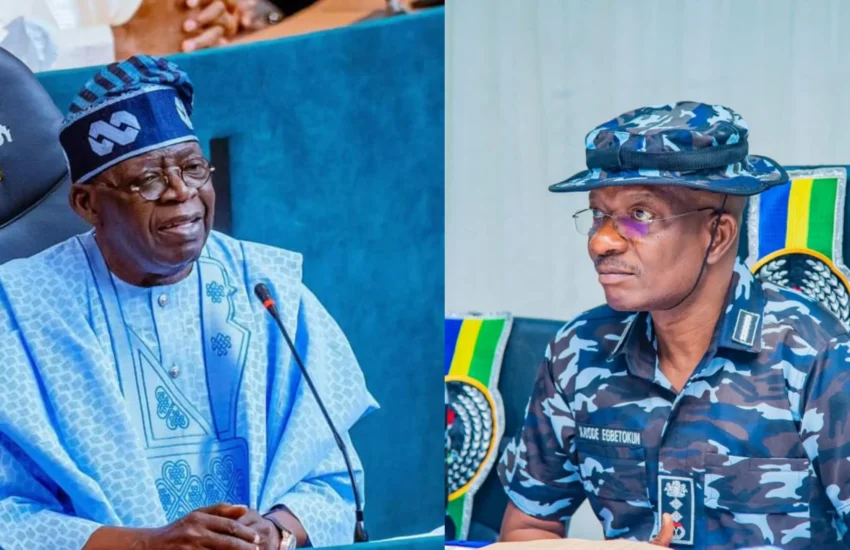
President Ahmed Bola Tinubu’s reaction was to abolish the Federal Ministry of Sports and elevated the National Sports Commission, more or less to a ministerial status. I believe more should be done to restore hope to the Nigerian youths, so that they cannot only excel in sports and bring glory to the nation and their families.
In doing so, the youths can hope to live a secured and meaningful lives after they have passed their competitive ages.
The Federal, States and Local Governments and the private sectors should take sports more seriously, not only as an entertainment or recreation but as an economic necessity.
The private sector should collaborate with the government, not just to promote sporting activities, but as investors on infrastructures.
This could be on the basis of Public- Private Partnerships PPP. I believe developing sports in Nigeria, requires a multi-faceted approach that involves the government, the private sector, including successful athletes, especially footballers and charitable organizations and foundations.
The government can issue a sports bond to raise seed money for the establishment of a National Endowment for Sports that could provide a dedicated funding mechanism to support sports development, increase investments in building sports infrastructure, like stadia, training centers and school fields to support athletes development and competition; support grassroots sports development by providing funding for local sports associations, scholarships to youths to train in local and foreign universities, training supports, including health insurance, financial grants to local leagues, and tournaments.
More participation in international competitions will strengthen the confidence of our athletes, by gaining more experience and exposure, and a platform for more athletes to showcase their talents.
It is equally critical to leverage modern technology and innovations in training methods, such as data analytics and sports science, to give our athletes a competitive edge. It will also support talent hunts and promote mass participation in sporting activities.
The shame of seeing our former athletes who brought glory to the nation wallowing in poverty and unable to fend for themselves and families including taking care of their health challenges would be a thing of the past if a structured funding system is created and managed by the endowment to take care of the dire needs of our champions who brought honour and glory to our country. The endowment should also promote sports entrepreneurship that would encourage sports-related businesses.
Major sportswear companies, like Addidas, Nike and others are businesses and they produce boots and Jersies at great cost for our national teams. They make all the profits. Who can blame them? We can produce them in Nigeria as most of the raw materials are sourced from petro-chemicals. With our huge population and sports crazy people, every Nigerian would want to wear the T-shirts and Jersies of our national teams instead of those made for European leagues.
Our recent failures are clear indications that we can no longer rely exclusively on the performance of our youths in diaspora, in as much as they have passion to serve their fatherland. Our local league is a joke and can’t compare with the North Africans, South Africans and even our less endowed neighbours like Niger, Benin, Togo, not to talk of Ghana, Cape Verde, Equatorial Guinea, Senegal, Mali, Cote D’Ivoire and others.
There is absolute need to build better infrastructure by league owners and paying athletes well enough to improve on their standards. That a Malian is the National Coach of the Super Eagles is something to reflect on.
Our footballers also need to be trained either at the National Institute of Sports or at the newly established Federal University of Sports Afuze, in Edo State. We need well trained coaches, physical trainers, psychologists, physiotherapists, referees, games masters, and experts in sports management. Some of the athletes who have retired from active competitions can also be retrained to play some of these roles, and who says they can only be trained in Queens English?
The global sports industry is put at $512 billion and projected to reach $624 billion by 2027, according to Deborah Yemi Oladayo in a recent article in Business Day. The Nigeria Bureau of Statistics (NBS) puts the contribution of sports to our Gross Domestic Product (GDP) at 0.3%.
In South Africa it is 2.5 %. The National Sports Commission has projected sports contribution to 5% of GDP – revenue of about $3-4 billion by 2027. I have my doubts if this is achievable without a change in policy and attitude. By implementing these strategies and through innovative funding mechanisms and a deliberate policy shift, Nigeria can win the Football world Cup.
Our youths will continue to thrive, attain whatever heights possible in sports and boost the economy and even become rich instead of living their years in poverty and destitution.