JUSTICIA on The Southerner Newspaper
Sunday, October 19, 2025
In the absence of a vibrant civil society, a free press, and an independent judiciary, it was clear that the institutional framework to build the fledgling nation, express the democratic aspirations of the people in free and fair electoral contests, and satisfy their passion for freedom, could not be met.
The promise of independence had been crushed in the cradle. Civil society, which had played a pivotal role in the nationalist struggle, was paralysed or sucked into the vortex of the neo-colonial arrangement. Besides the student union, which protested the Anglo-Nigeria Defence Pact entered into by the Balewa Administration, labour unions were weak and ineffective, as they were riven by infighting and corruption.
The Nationalist Movement, which fought for independence, was a coalition of different groups: ethnic associations, traders, cooperatives, market women, trade unions, professional groups, and Pan-African organisations inspired by Marcus Garvey and W.E.B. Du Bois.
The press and various trade unions of the time, such as the Nigeria Union of Railwaymen led by the charismatic Michael Imoudu and the Nigerian Union of Teachers, gave life to the struggle against British colonial rule. But with the birth of the nation, the vibrant civil society that ought to have moderated the excesses of the politicians, mobilise the people to embrace civic behaviour, and design measures to ensure that the state would be a home for all with a common national agenda and consensus to promote the common good, was found wanting.
Without compelling non-state actors, politicians saw the military as potential allies and courted them.
In the North, Regional Premier, Sir Ahmadu Bello and Federal Defence Minister, Mohammadu Ribadu scouted the secondary schools to recruit boys to become future officers of the Nigerian Army. They could have encouraged the boys to become engineers, doctors, and scientists. They did not. He who controls the army controls power. Power is deadly. But the realisation of that truism came too late and at a grave cost to the nation
British military and police officers were still in command of the army and the police. The judiciary still had British judges sitting while the Privy Council in London served as the highest court of appeal in Nigeria; British civil servants still staffed the top echelon of the civil service at the federal and regional levels.
Needless to add, they were also in place, still hovering around various government offices as key advisers to the political leaders who trusted the British more than their people. For the first six years in the life of this nation, Nigerians lived under the illusion of independence.
The military intervention in 1966, which led to the death of Balewa, Akintola, Ahmadu Bello, Okotie-Eboh, and prominent military officers, caught the British flat-footed. Still, they were to take control of subsequent events that precipitated the Nigerian Civil War and killed over two million Nigerians. The damage to the nation by successive military rulers, most of who were trained at the Sandhurst and Mons military academies in England, has left an imprint that the nation still suffers sixty years after independence.
Military rule decimated civil society, as a culture of militarism rooted in the disdain for and feeling of superiority to ‘bloody civilians’ became the norm. Even after the military left power in 1999, that culture remained deep-rooted. Political power has been a major contest between former members of the Supreme Military Councils and some civilians who served them.
As a child of independence, I have often compared my life’s trajectories and experiences with those of the nation. How was my life affected by the environment in which I grew up and was molded? How did I evolve, surmounting all odds to be where I am? I see my travails and successes as a reflection of my Nigerian experience, image, and story.
Growing up, there was no silver spoon. In my environment, silver meant nothing to us. There was no upper class; we all lived off what we could grow on our farm, or what we could afford, and there was a vista of hope in education. Our parents were ready to sacrifice whatever little comfort they had, to ensure we had access to education.
When we were enrolled in primary one in 1966, our young independent nation was going through political turmoil. We were like Bob Marley’s buffalo soldiers, fighting for survival just as we were arriving.
It did not take long before the guns started blazing in 1966 – Nigerians had turned on themselves. Military officers, many of them trained in Britain’s famous Sandhurst Military Academy or Mons, who had served together restoring peace in the Congo when they overthrew Julius Nyerere had marched together at parades, drank together, and shared pepper soup in the same mess, now turned their guns on each other. On orders from their Sandhurst-trained officers, soldiers, and other junior officers unleashed mayhem, as esprit de corps was thrown to the dogs; corpses of soldiers and officers, former comrades in arms, strewn on the lawns of Army barracks in Abeokuta to Ibadan and various parts of Lagos.
Before the soldiers turned on each other, on January 15, 1966, just two weeks after we enrolled to learn to read the alphabet in primary schools, Major Chukwuma Kaduna Nzoegwu launched what he and his colleagues claimed was a revolution to drain the swamp of corruption polluted by ten per-centers, and those who were making our giant nation look small.
The officers called the slaughter that followed a revolution, but that is not how they have been remembered by generations of Nigeria who have lived through the evil seeds sowed on that night in January 1966. It’s been a legacy of blood- letting, a culture of violence, of impunity, bitterness, and rivalries between the large and small ethnic groups.
The giant nation has become a dwarf, a bone in the throat of Africa, the laughing stock of even our West African neighbours, with life expectancy of 54 years,, the lowest in the world, and 45 % of the population living in multi-dimensional poverty, the highest number of out of school children, whilst the ten-percenters take control of our common patrimony, grabbing everything, grubbing everything as the rest starve, in refugee camps or surviving at the margin.
As the smoke of gunfire cleared and the body count began a few days after the revolution, the bodies of Prime Minister Balewa, 53, who had appeared on the cover of Time Magazine as the face of Africa’s peaceful transition to democracy, and his Finance Minister, Festus Okotie-Eboh, 54, the flamboyant millionaire industrialist who founded the Central Bank of Nigeria (CBN), and became a hero to the Midwest people for arm-twisting northern leaders to support the creation of Mid-West Region in 1963, were found in the bush near Abeokuta in the early stages of decomposition.
The Premier of Northern Region, Sir Ahmadu Bello, 56, who — less than five years earlier — had sent his officials to visit secondary schools in the north to encourage impressionable young men who had never stepped out of their rural villages to join the army because ‘he who controls the military controls political power’, was another early victim of the soldiers’ fury. His bullet-riddled body was pulled from the ruins of his official residence in Kaduna. Chief Samuel Ladoke Akintola, Premier of the Western Region and an ally of the slain Prime Minister, went down in a fire fight with the soldiers in Ibadan.
Akintola’s disagreement with Awolowo in the Western Region, his alliance with the conservatives of the NPC, and their grim determination to retain power at all costs at the west and federal level are some factors responsible for the collapse of the First Republic. These events gave the military adventurers the excuse to commit the wholesale murders of 22 politicians and military officers as 3000 Nigerians fled as refugees to Dahomey (Benin Republic) in the name of a putative but doomed revolution.
From May 28 to August 1966, 115 ethnic Igbos were killed in the northern states, while about 30 people were killed in Lagos on July 29, the day Major Murtala Mohammed, leader of northern faction of the military, seeking vengeance for what they perceived to be the one-sided nature of the January 15 slaughter of mostly northern and western soldiers and politicians, hunted down Igbo and southern officers in Ibadan and Lagos.
The Head of State, the primary beneficiary of the January slaughter, Major General Thomas Aguiyi-Ironsi, 42, and the Military Governor of Western Region, Colonel Adekunle Fajuyi, 39, were hunted down in Ibadan and killed. Fajuyi was the second leader of the Western Region to die that year. The fall of Ironsi and his military regime led to the emergence of Lt Col Yakubu Gowon, 32, who sought to unite a bitterly divided country amid harsh reprisals against Igbo people in the northern states. The massacre of Igbo and people from southern Nigeria, which followed, would go down in Nigeria’s history as a pogrom.
The number of people killed from May 28 to June 2 1966 was put at 115, and from June 6 to September 9, 1966, range from 8,000 to between 30,000 and 100,000. Between September 29 and October, 42,000 more Igbos were killed in Northern Nigeria, while 250,000 fled to the eastern region. Amid this tragic situation and blood bath, a constitutional conference was held in September 1966 to find common ground to ease tension and pave the way for reconciliation, and a new constitutional order.
However, it was medicine after death. According to international law, it also qualified as genocide.
The declaration of Biafra by Lt Col Chukwuemeka Odumegwu –Ojukwu, the Military Governor of the Eastern Region, took the young nation closer to the abyss. As Nigerians stared into the abyss, the abyss stared back. It was not a pleasant prospect.
On July 6, 1967, federal troops launched a military offensive on Biafra troops, and the civil war began.
We, the ‘born free’ generation had not even been tested on how well we were learning the ABCs. We were destined to grow up fast or die young. Our childhood innocence was lost. The vista of hope heralded by independence became clouded. Thousands of us would die of kwashiorkor. That ought not to be our fate, but it was. The conflict had gone out of control and became a blood for blood ritual. Although some of us born outside the theatre of war went to school normally, amidst the uncertainty that had enveloped the country, it was easy for even children to observe that their older siblings had left home and gone to war.
And war meant death, amputated limbs, and other disorders that would torment most soldiers for the rest of their lives, even after the shooting had stopped.
For three decades, the military toyed with the destiny of Nigerians. A nation with so much potential became an international pariah as corruption, violent crimes, and political instability, and ethno-religious conflicts threatened its very survival.
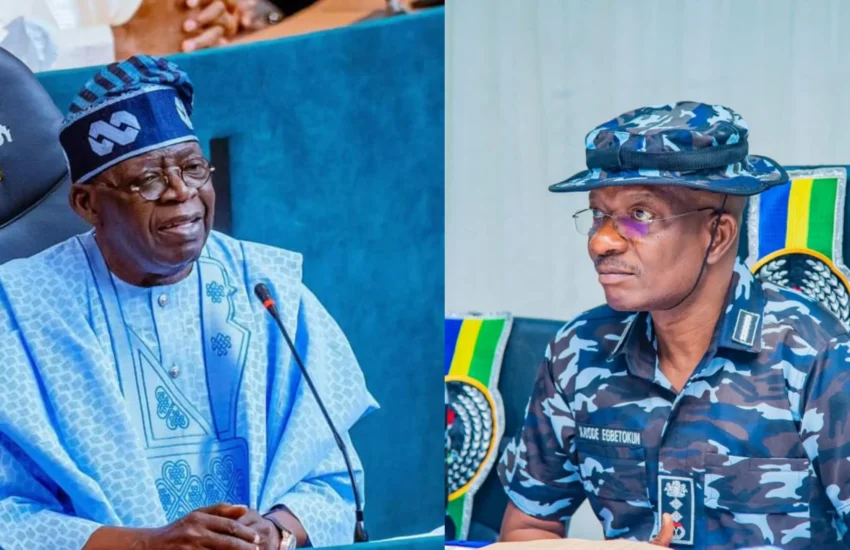
It has been 26 years now that the military left the stage. Nigerians are once again looking as history beckons on President Tinubu, the legislature and the powerful state governors to take the bold steps necessary to renew our independence give it new meanings; rebuild the national fabric and restore the integrity of our nationhood.
Can Nigeria survive for another sixty five years? Yes. I am an optimist. I see our capacity; I see the gradual emergence, against all odds, of the Nigerian identity, the Nigerian spirit, the Nigerian swag and the Nigerian energy. The ball is in our court. Beyond the economic reforms that have shown some promises, is the absolute need for political reforms, attitudinal reforms and a resolute intentional determination to forge ahead.
The Governors should release funds to the Local Governments Areas to tackle rural poverty and get the farmers, artisans and small businesses back to work.
The Security forces should step up the operations to stamp out insecurity once and formal. I propose we take no more prisoners. The campaign should deploy and apply maximum force. I propose that we start with electoral reform and enact a new Legal framework before the end of December.
We must reform the electoral process before the 2027 general elections. With Professor Mahmoud Yakubu replaced, INEC should be thoroughly cleansed and rejigged to be a transparent, efficient, effective and clean electoral body so we can end the 2027 election at the ballot, not the tribunals; restore faith in the democratic process, end the seemingly endless transition. And consolidate democracy.
A government that emerges in a free and fair election, devoid of conflicts, with the out outcome generally acceptable to majority of Nigerians and the international community would be a major step to ending our national afflictions, restoring peace to land, engendering good governance and consolidating democracy. May Nigeria live for eternity.