




Sunday Southerner – Main Lead
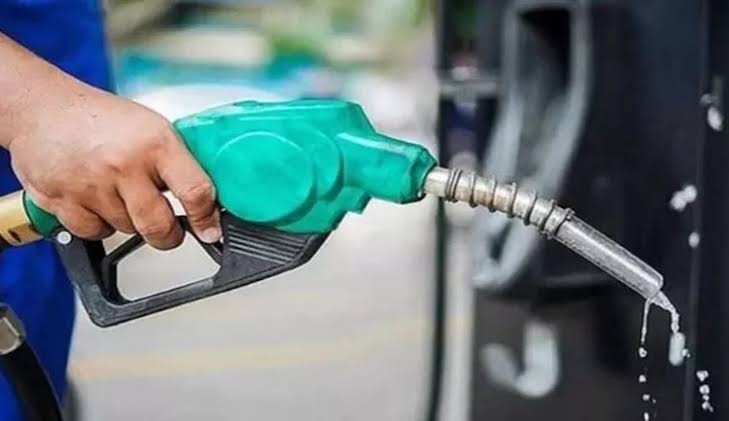
*Petrol price rises further
*Cost of living, inflation worsens
The second choke point in crude oil supply with the Houthis’ control of Red Sea route in Yemen has set off alarm bells with concerns that an additional 10 percent in global oil supply may be locked in as Saudi Arabia’s second export route is shut.
For Nigeria, the rising prices of petrol, diesel, aviation fuel and other refined products may worsen inflation and further raise the cost of living.
In direct reaction to the escalation of US strikes on Iran, the Islamic Republic’s retaliation on America assets in the Gulf as well as the successful incursion of Houthis in choking Saudi Arabia’s alternate export route have elicited global alarm on further reduction in oil supply. Already, the Brent crude benchmark has gone beyond the $100 mark per barrel, while global refining capacity and fuel inventories are under pressure.
The International Energy Agency (IEA) expects a significant 2026 decline in global oil supply because of disruptions in the Gulf and Middle East.
A sustained rise in global crude-oil prices will have mixed effects on Nigeria.
It can improve government revenues and foreign-exchange earnings, but it
prices of petrol, diesel and aviation fuel are expected to continue an upward swing as Nigeria’s downstream market is now much more exposed to international crude and refined-product prices than under the old subsidy regime.
When crude becomes more expensive, the cost of producing petrol and diesel rises. This is already visible as Dangote Refinery has increased its petrol gantry price to ₦1,350 per litre, while its diesel price was raised to ₦1,850 per litre.
For manufacturers and the economy generally, the increase in diesel at a time the price is already over N2,000 portends grave repercussions. Diesel is particularly important because it powers trucks, factories, agricultural machinery, construction equipment and many businesses’ generators.
If diesel prices rise substantially, the effect spreads through the entire economy. A transporter pays more for fuel, the farmer pays more to move produce, the manufacturer pays more to operate machinery and the distributor pays more to move goods.
That eventually appears in the price of food, building materials, manufactured goods and services.
The present global situation is especially worrying because diesel supplies are already tight internationally.
Higher fuel prices are effectively a tax on the Nigerian economy. The first-round effect is higher transport costs. The second-round effect is that businesses increase prices to recover higher operating costs. Workers then demand higher wages, while consumers reduce spending because their incomes buy less.
Invariably, a prolonged oil-price shock could slow the improvement in Nigeria’s inflation situation.
However, a major positive for Nigeria is that revenue for the various tiers of government could increase.
When crude prices rise, the government will earn more from oil exports, if production volumes remain reasonably strong.
Higher oil prices could therefore increase Federation revenue; improve foreign exchange inflows; strengthen government finances; support external reserves; improve Nigeria’s ability to service foreign obligations; and potentially strengthen the naira.
But there is an important qualification: Nigeria only benefits fully if it produces enough crude.
If production remains below potential, Nigeria may not capture the full benefit of high prices. Recent reports also show that the Dangote refinery is buying substantial volumes of Nigerian crude, reducing the amount available for export.
Higher crude receipts can increase dollar inflows and ease pressure on the foreign-exchange market. A stronger or more stable naira would be particularly helpful as Nigeria’s economy is still import-oriented.
It could moderate the naira cost of imported machinery, medicines, raw materials and some petroleum-related products.
But if oil prices rise because of a severe geopolitical crisis, the benefit could be partly cancelled by higher global prices for imported goods and shipping.
Aviation will feel the pressure as jet fuel prices are closely connected to international energy markets. As air travel is almost out of reach of the people, it will become even more exclusive for the very rich.
A sustained oil-price increase could therefore raise the cost of domestic air travel; international flights; cargo transportation; and airline operations.
Despite the dusty horizon, Nigeria is in a better position than it was several years ago because of the emergence of the Dangote refinery.
The refinery has a capacity of about 700,000 barrels per day, and its increasing domestic crude purchases and production of refined products are reducing Nigeria’s dependence on imported petroleum products.