(Published by The Southerner on Thursday, May 22, 2025)
By Akanimo Sampson
At the opening ceremony of the 8th Quadrennial State Delegates’ Conference of the Nigeria Union of Teachers (NUT) in Uruan Local Government hall, Akwa Ibom State, Governor Umo Eno applauded teachers for their unwavering commitment to the development of society, describing them as the bedrock of progress and success.
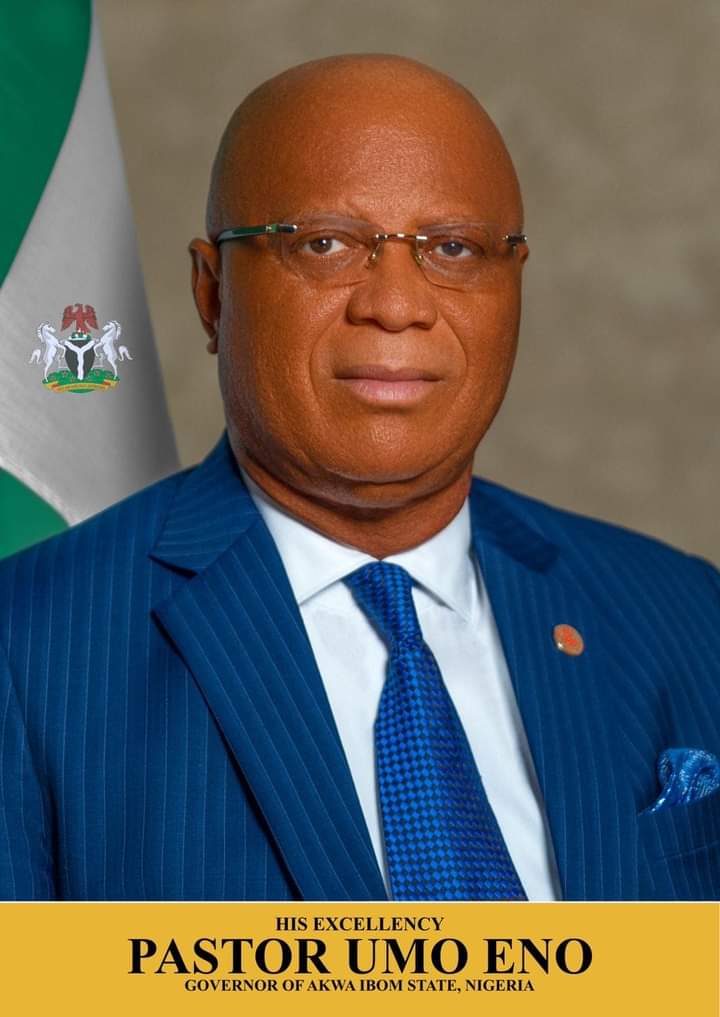
Delivering the governor’s message, Education Commissioner, Prof. Ubong Essien Umoh, expressed the state government’s deep appreciation for the teaching profession, and highlighted the low out-of-school rate for primary school-aged children in Akwa Ibom standing at a minimal 3.5 percent, far below the National average of 25.6 percent, as a significant indicator of the state’s progress in education.
Yet, primary school teachers and their next of kin in the state have appealed to Eno, to ensure the smooth payment of their pensions, gratuities, and the salaries of retired and serving primary school teachers, notwithstanding the issue of local government autonomy.
The appeal by the senior citizens followed recent delays in the payment of their pensions. During an enlarged meeting of retired primary school teachers and their next of kin held in Uyo, the group expressed concern that pensions being paid from the 21st of a new month is an unwholesome development that adversely affects their well-being.
In an eight-point resolution reached during the meeting, the group, among other pleas, called for pensions to be paid on a regular basis.
In a statement endorsed by Felix Ime Cookey, Chairman, and Emmanuel Udoaka, Secretary, the group decried the non-implementation of the N32,000 minimum pension for retirees in the state.
According to them, “It has been three months since the minimum wage of EN80,000 was paid to serving workers, but we are yet to see any increment in our pensions. The government is urged to conduct the necessary verification without further delay in the interest of these aged individuals. The meeting in session expressed heartfelt appreciation to the government for the payment of the 7.5% pension contribution to contributors and requested the government to increase the number of local government areas per batch to ten.”
The group also observed that the continuous withholding of unpaid pension arrears is very harmful to the affected retirees. They noted that these individuals retired during the last administration and have endured great hardship for over ten years, with ten months or more of unpaid pension arrears. “We appeal to our compassionate governor to alleviate the suffering of these individuals who have been legitimately calling on the government since 2015. It was noted that only primary school retirees are owed unpaid pension arrears in this state.
“We also noted with dismay the non-payment of the 2013 and 2014 leave grants, respectively, and pleaded with the governor for intervention. We, the retired school teachers and their next of kin, once again thank Governor Eno for the love, care, and support given to retired teachers and indeed all pensioners in the state. The meeting in session, having critically observed the governor’s goodwill towards the plight of retired teachers (both living and deceased), unanimously passed a vote of implicit confidence in the governor and pledged unflinching support for his administration.
“We have also resolved to support his future political aspirations come 2027, while appreciating the Commissioner for Local Government and Chieftaincy Affairs, Frank Archibong, and the Head of Civil Service, Effiong Essien, for showing great concern for retired Primary School teacher issues”, they said.
Disturbingly, since the Akpabio administration (2007-2015), there is nothing to write home about teachers in the state. For instance, during the Udom administration, hundreds of children and relations of late teachers in primary schools protested in Uyo, the state capital, against non-payment of their parents’ gratuities by the state government.
They protested on the platform of the Association of Next-of-Kin of Late Primary School Teachers, barricading the gate to the Government House for several hours demanding to be given attention by the former governor, Udom Emmanuel.
Leader of the association, David Essien, said the affected families had written several letters but to no avail revealing that some of the dead teachers served the state government for upward of 35 years before retirement.
While Essien said some of the dead teachers served and retired as far back as 1999, yet nothing to show for the services they rendered for the state before they died, another protester, Nsima Akpan, said his late mother, Magdalene Akpan, served for 35 years at Government Primary School, Mbiabam Ibiono in Ibiono Ibom Local Government Area but died about three months to her retirement.
“Up till now, the family has not received anything like benefits in form of gratuity or pension as part of her reward for serving the state up to that period. Each time we protest, the government will tell us to come today or come tomorrow. We are tired of this kind of unfulfilled promises because some of those who are supposed to benefit from this facility are sick with no money to take them to hospital. Some who were in schools have dropped out because there is no money to fund their education”, he said.
Chairman of the Nigerian Labour Congress in the state at the time, Etim Ukpong, said the state government remained insensitive to the plight of the dead workers in spite of several interventions by unions. Ukpong, who also doubled as the Chairman of the state branch of the NUT, called on the government to identify priorities.
He said the state government at the time received some funds from the Paris Club, pointing out that labour unions advised the government to use part of the money to clear the backlog of workers’ pensions and other indebtedness. “I cannot stop any aggrieved person or group of persons from protesting. We have done our best. Government does not seem to appreciate our efforts to mediate. The government is even trying to rubbish labour leaders; they are not even communicating with us”, Ukpong said.
An official from the office of the Head of Service, who did not disclose his name, said that leaders of the association were still meeting with the then Head of Service, Mrs Ekereobong Akpan.
In a seeming clear rebuke of his predecessor’s record, Governor Eno in July 2023, declared a state of emergency on primary education in the state. He boldly directed immediate renovation and upgrade of facilities in primary schools beginning with Christ The King (CKS) Primary School situated along Wellington Bassey Way. Uyo, the state capital.
Wellington Bassey Way terminates at the Government House, Uyo, the seat of power in the state. Yet, the school was rotting away and unnoticed by the previous administration. The appalling state of Christ the King Primary School, perhaps, vividly captures the nonchalant attitude of the Udom administration to school infrastructure and to teachers’ welfare.
CKS, which serves as a model of the state government’s vision of primary institutions will be upgraded to standard with the renovation of structures, provision of educational materials, solar lights, pipe borne water and staff quarters .
Shockingly, Akwa Ibom hosts the American oil and gas major, ExxonMobil. This corporstion’s contributions to Nigeria’s oil earnings, pushed Akwa Ibom to be receiving more revenue from the Federation Account every month. That is even besides the billion of naira the state generates as internal revenue.
For instance, between 2013 and 2017, Akwa Ibom hauled in N1.02 trillion from the Federation Account in Abuja, Nigeria’s capital. Under the watch of the immediate past governor, Udom Emmanual, the state in the first quarter of 2017, received N34.8 billion.
Yet, teachers in the state in May 2022, downed tools over the Udom administration’s failure to meet their demands.
NUT in the state ordered its members in public primary and secondary schools to withdraw their services following the failure of the outgone Udom administration to address their demands. In a statement by its Senior State Secretary, Victor Amirize, the union said the decision to proceed on strike was taken after all avenues of negotiation and amicable resolutions failed on the part of the Udom administration.
The administration was not able to address the demands of teachers after 21 working days and subsequent seven days ultimatum by the union to the government. The Udom administration, according to NUT, promised payment of one year leave grant on compassionate ground and completion of payment of one month minimum wage arrears to primary school teachers.
NUT also listed their demands to include refund of seven and half per cent contributory pension to primary school teachers, payment of gratuity, harmonisation of pension to retired teachers, payment of 2013 to 2021 leave grant to primary school teachers, payment of promotion arrears to primary school teachers from 2011 to 2016.
Others are, release of 2017, 2018 promotion exercise conducted by SUBEB, immediate commencement of 2019, 2020, 2021 promotion exercise and appointment of teachers as Permanent Secretaries, and release of promotion result of teachers who attended the last promotion exercise.
While appealing to parents, pupils, students and the general public for their understanding, NUT accused the Udom administration of “insensitivity to the plight of teachers” which pushed teachers into the strike action.
Embarrassingly, Osun State in Western Nigeria, that does not even get 10 percent or what Udom was receiving monthly from Abuja, was able to remain among the three top states with an unmistakable lead in university JAMB admissions into courses leading to the award of degrees in engineering for years. The others are Oyo and Ogun still in.Western Nigeria.
In the field of medicine, Imo, Anambra, Delta and Enugu were the lead for five years, while Udom’s Akwa Ibom was not among the five best performing states in West African Senior Secondary School Certificate Examination (WASSCE). However, Governor Eno said apart from replicating the CKS model in schools across the rural areas, his administration will provide special incentives for teachers in rural and riverine areas to encourage them to perform maximally in those communities.
The directive came when the governor embarked on an unscheduled inspection of facilities at the Wellington Bassey Way primary school.
While inspecting the facilities, he also interacted with staff and pupils of the school to enable him gather firsthand information on their needs and welfare. That will enable his administration to chart a way forward towards creating model primary schools in the state..
His media handlers said Eno spoke with nostalgia on the good old days when accommodation was provided for teachers within the school vicinity, maintaining that the arrangement was a morale booster to enhanced their efficiency as the teachers had a strong grasp of the children in character and learning and therefore restated his commitment to bringing back the glory days of basic education by providing the necessary facilities as well as adequate security in the schools.
Accordingly, Governor Eno directed the Ministry of Housing to expedite action on the remodeling of the school to fit it with solar lighting system for all round power supply and other facilities within three months.
Impressed with the dutiful Headmistress, Mrs Eme Joseph Bassey, and the comportment of the pupils during their exams, Eno directed the immediate and special promotion of the headmistress, warning that she should not be posted out of the school.
Mrs Bassey, thanked the governor for the visit, stating that despite the proximity of the school to the Government House, no governor has ever visited the school to know its challenges. She expressed appreciation on the decision of the Eno administration to remodel the institution, saying God has used the occasion of the inspection visit to elevate her on the profession and expressed appreciation to the governor for the special promotion given her.
Sometime in May 2018, an online news outlet reported that three pupils between the ages of three and four laid fast asleep on a bare floor in a classroom at Annang Peoples Primary School, Ikot Iyire in.Abak Local Government Area.
Reportedly, the doors and windows are wide open and the sleeping kids are not even covered with blankets, despite the cold wind. “The kids were visibly shivering, teeth chattering, and bodies shaking. They coil themselves up ostensibly to conserve whatever heat remains in their bodies.
“A few other kids sat idly on two desks. They weren’t looking cheerful at all. At a corner, in front of the classroom, sat a lonely woman, their teacher”, the report said. The female teacher told the newspaper that the pupils were part of the Early Education programme of the school, pointing out that there is nothing teachers and the school authorities can do to help since the school lacks even mats to spread on the floor for the poor kids.
The school has been in dire need of help, infrastructure wise. The two main classroom blocks were without roofs. The other remaining blocks were at various stages of decay, making them unsuitable and unsafe for pupils and their teachers. Most pupils sit on the bare floor to learn because of the lack of chairs and desks. Inside the Primary Two classroom, 42 pupils were made to share only three desks.
While the Early Education classroom has only two desks, there are no toys or learning materials for the kids. In most public primary schools in Akwa Ibom, there is no urinary, no toilet, and no source of drinking water. During the rainy season like now, pupils feel discouraged to go to school because their classrooms are often flooded.
Coastline communities within the oil-bearing local government areas of Ibeno, Eastern Obolo, and Mbo seem the worst off, as pupils have to cross rivers to get primary education elsewhere because of lack of schools in their own immediate communities. Government Primary School, Isotoyo, in Eastern Obolo, with its wooden skeletal structure loosely covered with dried palm leaves, can easily pass for a shrine.
Generally, ugly sights of roofless school buildings, collapsed classroom blocks, shortage of teachers, lack of basic learning materials, and poor little children struggling to learn under the most dehumanizing conditions greet any observer across the big oil state. Schools in Esit Eket Local Government Area are in Ntakdeplorable states among them, Government Primary School, Etebi, Government Primary School, Akpautong, and St. Theresa’s Primary School, Inyang.
At Government Primary School, Ikot Ntuen Oku, located within the heart of Uyo, renovation work on the main classroom block awarded by the Udom administration was abandoned for months in 2018. One classroom block in the school was dilapidated. One classroom of the two blocks at Government Primary School, Udi-Ika, in Ika Local Government Area was without windows and ceilings. The broken cement floor in the classroom required some work. The school is still in need of more desks and more teachers.
At Ediene II, some 20 minutes’ drive from Ikot Uyire, the only government primary school in the village is reportedly in ruins. One of its classroom blocks was without a roof, while tall weeds sprouted from the broken parts of the cement floor inside the classroom. St. Theresa’s Catholic Primary School, Ikot Anam/Ikot Inyang, in Ekparakwa, Oruk Anam Local Government Area, has one classroom block without a roof.
All the three classroom blocks at Government Primary School, Mbon Mbere, still in Ekparakwa, appear new and in good condition, but pupils in the school sit on bare floors to learn because of lack of desks.
Interestingly, the state Ministry of Education has Area Education Officers spread across the state with the mandate to monitor education in local communities.
There are also senior ministry officials whose job schedules include paying supervisory visits to schools and submitting reports on the condition of schools to higher authorities.
As governor, Udom Emmanuel had four Special Assistants on Education monitoring alone, with three of them covering each of the three senatorial districts and reporting directly to the then Senior Special Assistant, Mrs. Idongesit Etiebet, who ended the Udom administration as Education Commissioner.
Mrs Etiebet says she was aware of how bad things have been. “I do drive around Akwa Ibom and I know what we saw in 2015 and how much we have intervened”, she said. She claimed that Udom was ‘doing a lot’ to salvage the situation, pointing out that they did renovation and new construction in almost 400 schools.
But, if the Udom administration truly did a lot to salvage the situation, the state of emergency declared by Eno would not have been necessary. And, going by the continued outcry of teachers, children of retired teachers who died without receiving their benefits, that outgone administration, certainly did not do well.
For instance, in November 2021, distraught children of deceased primary school teachers took to the streets of Uyo, lamenting that their parents died in squalor, while those alive are suffering different ailments without remedy as the Udom administration failed to pay their entitlements for many years running into N28 billion.
The protesters who blocked the IBB Way in the state capital, lamented non-payment of pensions, gratuities and other entitlements including non-refund of 7.5 percent of their compulsory pension contribution by the government allegedly leading to the death of hundreds of the retirees.
In a joint statement by the protesters’ Chairman, Secretaries of the retired primary school teachers and next-of-kin of deceased teachers, Dr Felix Cookey, Emmanuel Udoka, and Benjamin Benson, they wondered why the government was yet to refund their 7.5 per cent compulsory pension contribution for eight years.
They also called for the harmonization and upward review of their pension, stating, “it is pathetic to see a pensioner going home a month with N2,000 as pension considering the present economic realities”.
Part of the statement says, “We the retired primary school teachers and the next of kin of late teachers in Akwa Ibom have come out to tell our son, (ex-Governor Udom) that we are very hungry, very sick, very embarrassed, humiliated and disappointed.
“Our families are suffering and many have died due to extreme poverty occasioned by a non-positive response by the governor towards our plight.”
However, reiterating his administration’s commitment to education through the ARISE Agenda, Eno outlined numerous incentives provided to teachers. These include the consistent payment of salaries, implementation of the new N80,000 state minimum wage, the N70,000 national minimum wage for union staff, refund of 7.5% contributory pension funds, payment of six years’ arrears in leave grants, and a one-off N1.2 billion wardrobe allowance.
He also cited the release of promotions for secondary school teachers, the construction of model primary schools across the 31 LGAs, 13th-month bonuses, and regular payment of gratuities to retired teachers as part of the administration’s efforts to uplift the education sector.
In his remarks, the state NUT Chairman, Edet Okon Emenyi, expressed profound gratitude to the state government for its many interventions in the education sector. He described the support as “numerous and motivating” and urged teachers to reciprocate through greater dedication.
While celebrating the strides made, Emenyi also appealed to the governor to complement the numerous achievements in the education sector with the recruitment of more teachers to improve the teacher-student ratio.
Delivering the keynote address, Dr. (Mrs.) Anyanime Akpan of the Department of Science Education, Akwa Ibom State University, stressed the importance of integrating local content in education, explaining that a curriculum rooted in indigenous knowledge, culture, and environment promotes more relevant learning and national development.
She further noted that traditional education in Nigerian societies prioritised character development, moral values, and vocational skills such as agriculture, carpentry, sculpture, and crafts, which should inform current educational strategies.