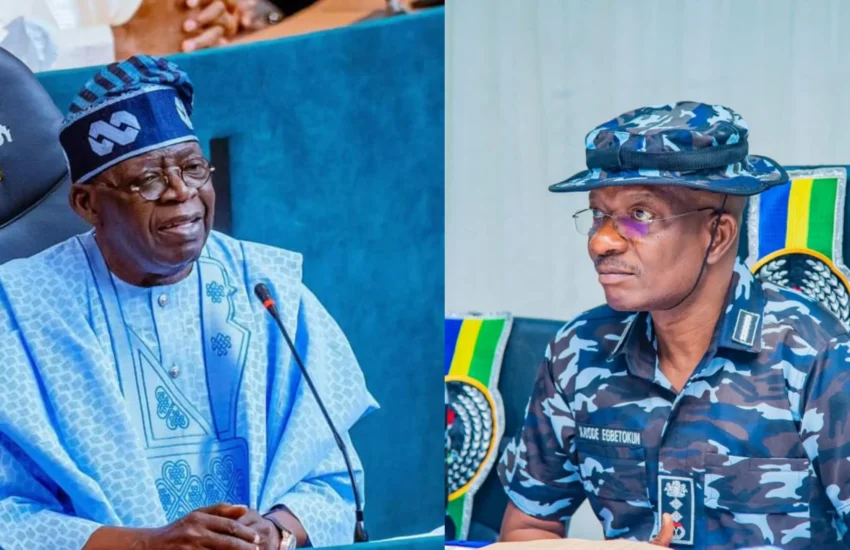




On April 2, 2026, President Bola Tinubu had to visit Jos, the capital of Plateau State, on short notice. It was a direct reaction to the ceaseless killings that had been going on culminating in Palm Sunday attack of March 29 that left more than 28 people killed and many more injured in the once peaceful Tin City.
Although he could spend only about 10 minutes at the airport where some of victims of the attack were brought to meet him due to logistics challenges, President Tinubu assured the people that his administration will ensure the killings will not happen again.
Having condoled the people, his promise will amount to routine condemnation without a concerted approach to combat and stop the killings.
Resolving the recurring killings in Plateau State requires a multi-faceted approach combining proactive security, technological surveillance, justice for perpetrators, and sustained peacebuilding.
During his brief visit to Jos, President Tinubu had directed the installation of 5,000 AI-powered surveillance cameras across the city to strengthen intelligence gathering.
Beyond that, the security agencies should adopt the use of drones to track the movement of the terrorists, especially when they retreat to their safe havens.
Utilising drones will reduce the exposure of security men to danger while enabling them to keep a tab on the movement of the terrorists. Implementing drone technology for real-time monitoring of rural and forest areas will give the security groups a headstart on the movement of of the terrorists.
While increased security deployment to high-risk areas like Bokkos, Mangu, and Bassa Local Government Areas is desirable, there should be a conscious effort to aid local vigilant groups to conduct reconnaissance of the forests and farmlands in their communities with security agents on standby to respond to strange movements and potential threats.
A core requirement to ending the culture of impunity and killings is judicial accountability. This involves identifying, arresting, and prosecuting perpetrators, rather than treating them as “unknown gunmen”. The pronouncement of some top officials of the federal government may not have helped matters.
Calling the terrorists “our prodigal brothers” as was done by the National Security Adviser is rather dubious as well as an uncanny and discomforting throwback to the disastrous “deradicalisation” of so-called “repentant” terrorists adopted by the administration of late President Muhammadu Buhari.
The deradicalisation was shrouded in secrecy and there was never a verifiable assessment of the programme
In fact, Buhari’s programme amounted to pampering of the terrorists who were alleged to have returned to their comrades after “rehabilitation” to continue the killing game.
In the past year, the frequency of lethal attacks and the fact that no one or group has been held to account for the killings shows a seeming lack of actionable intelligence. Shifting from reactive policing to intelligence-driven operations, utilizing local knowledge to identify criminals living within communities is imperative. Involving community leaders, traditional rulers, and youth groups in security committees to build local resilience and trust should be activated as part of the redemptive measures.
Additionally, equipping local security outfits with tools for monitoring and reporting suspicious activities to prevent attacks should be embedded into the security architecture.
While improved security operations are critical, there are underlying factors to the attacks. We believe the conflict is rooted in resource competition, land use and resource management.
Addressing rural infrastructural deficits and implementing projects to reduce poverty to create jobs, thereby reducing rural-urban migration and tensions are critical for long-term peace.
The killings in Plateau State have festered for too long and become more deadly. It is a huge stain on Nigeria’s standing within the international community and alongside mass killings in other parts of the middle belt, largely account for the country’s designation as an unstable nation where embassies routinely issue travel advisories to its nationals.
We cannot afford to have the killings become the new normal.