(Published by The Southerner on Thursday, May 15, 2025)
By Akanimo Sampson
The Tinubu administration is assiduously battling to hit its crude oil production target of 2.5 million barrels per day, without deploying the same energy in seeking to reverse the environmental tragedies of the oil-bearing communities of the Niger Delta.
National Security Adviser (NSA),
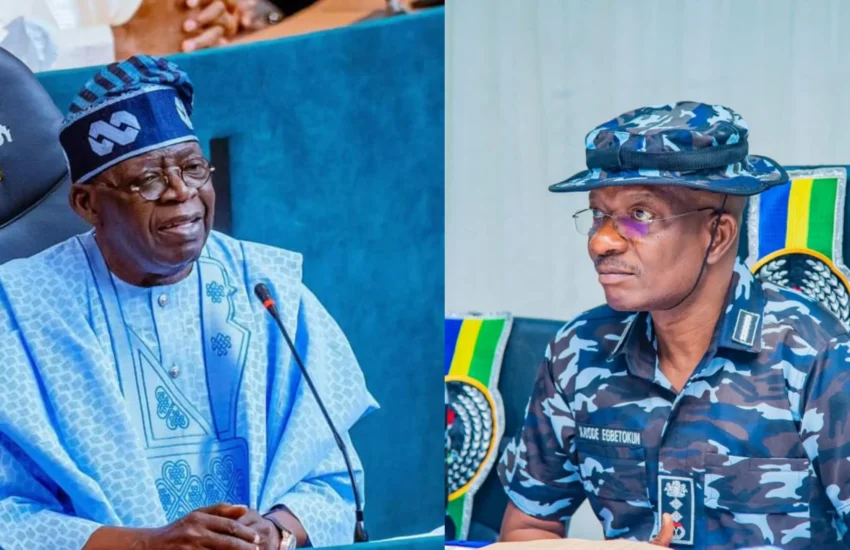
Nuhu Ribadu, said so very recently in Yenagoa, the Bayelsa State capital, at a stakeholders meeting organised by Pipeline Infrastructure Nigeria Limited (PINL), to appraise the company’s operations on the Trans Niger Pipeline. He explained that stiffer action was being taken against oil vandals threatening national assets and local communities.
Ribadu, who was represented by the Director of Energy in his office, Amachree Young-Harry, disclosed that a special panel comprising investigative and prosecuting teams has been working to bring offenders to justice, pointing out that over 100 suspects have already been prosecuted, with 15 recently sent to Port Harcourt prison.
“The President is serious about the 2.5 million barrels, and we are doing everything necessary to reach that goal. Success will depend on the collective efforts of all stakeholders involved”, he said.
At tthe event, President of the Ijaw National Congress (INC), Prof Benjamin Okaba, faulted the current terms of the Petroleum Industry Act (PIA), especially the three percent allocation to host communities, calling it an “insult.” He called for better agreements and full respect for such terms by both the oil firms and the federal government.
Though the PINL Consultant in charge of Community Relations, Akpos Mezeh, said they have recorded major successes in safeguarding the Trans-Niger Pipeline through close collaboration with host communities, government security agencies, and other key stakeholders.
“By investing in community needs, resolving disputes, and restoring the environment, PINL has helped reduce crude oil theft and pipeline vandalism. The result has been near-zero infractions on the pipeline, improved crude oil production, and greater investor confidence, all contributing to increased national revenue.” The success story is certainly not enough.
Infrastructural development in the Niger Delta communities does not depict the region as the honey comb of Nigeria, accounting for some 90% of the country’s revenue, providing more than 90% of total exports. And, despite this, the people still remain poor, marginalised and restive.
Resorting to violent conflict has been taken as the only way of expressing decades of grievances in oil-bearing communities. The conflict situation in the region has been cause for alarm since 1999 with kidnapping of oil company workers, bombing of oil facilities and confrontation with security forces, being common occurrences. it has had serious implications for the economy.
Unarguably, both the government and the big oil companies have failed to adequately recognise communities in the Niger Delta as the third stakeholder in the messy oil industry. That is why the INC chief says it’s an insult to give them a paltry three percent of the oil revenue.
Before the advent of the Tinubu administration, the relationship had been characterised by unfavorable state policies, myopic politicking and lack of standard practices. If the administration is eager to now approach the oil region question in an open manner in order to achieve the 2.5 million bpd target, then it should integrate the host communities as critical stakeholders, and ensure their unfettered participation and partnership transparently.
That will be a masterstroke by the Tinubu administration to the Niger Delta problem. Failing to do that, the region will continually pose a challenge to the economy of the country.
For those who may have forgotten, oil was discovered there in marketable quantities in the 1950s and came to dominate the market economy after the end of the civil war in 1970. The petroleum industry has so polluted the environment that the local people are internally displaced from how they traditionally earned their living—fishing and farming.
Generally, there is resentment that the region does not benefit enough from their oil wealth. Going by the “federal character” principle, oil revenue is buchered by Abuja to the states and local governments. Abuja retains for its use almost half of the revenue, and a bonus paid to the oil producing states. The active social formations in the oil states are still seeing it as too small, while much of the rest of the country sees it as too large.
Under these circumstances, discontent is endemic among people in the oil basin and periodically erupts into insurrection. Presently, Abuja has kept the insurrection at a relatively low level by payments to militia leaders, or “amnesty payments”, which date back to the end of the worst of the insurrection. When the Buhari administration tried to stop them, militants resumed attacks on the oil infrastructure, crippling government revenue, compelling the Buhari administration to resume them.
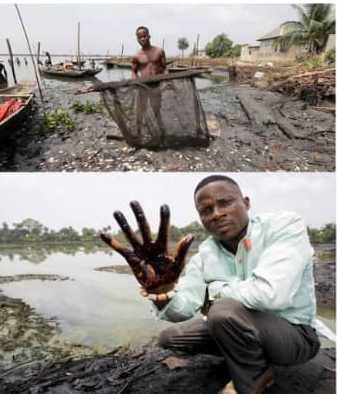
Sadly, the resultant environmental degradation from gas flaring, dredging of larger rivers, oil spillage and reclamation of land due to oil and gas extraction across the region costs about $758 million every year. But, 75% of the cost is borne by the local communities through polluted water, infertile farmland and lost biodiversity. It is already being said that in less than 30 years, the region could experience a loss of 40% of its habitable terrain as a result of extensive dam construction there.
Worse still, the oil infrastructures are old and lack regular maintenance. This is why more than 50 percent of all spills occur due to pipeline and tanker corrosion and accidents, other causes include sabotage and oil production operations, with an insignificant percentage of the spills accounted for by non-functional production equipment.
Why corrosion accounts for such a high percentage of all spills is because of the small size of the oilfields in the region. There is an extensive network of pipelines between the fields, and numerous small networks of flowlines, the narrow diameter pipes that carry oil from wellheads to flowstations, allowing many opportunities for leaks.
Onshore, most pipelines and flowlines are laid above ground. Pipelines with an estimate life span of about 15 years, are old and susceptible to corrosion. Many of them are as old as 20-25 years, and even more according to some environmental rights activists. For instance, the Anglo-Dutch oil and gas major, Shell, admits that “most of the facilities were constructed between the 1960s and early 1980s to the then prevailing standards.
While Shell will most likely not build them that way today, sabotage is performed through “bunkering”, a process that damages the pipeline during the oil extraction. Sabotage and theft through oil siphoning has become a major issue in the region and contributing to further environmental degradation.
Arguably, oil siphoning has become a big business, with the stolen oil quickly making its way into the black market, referred to as “Nigerian Swag”. This is perhaps, because Nigerian regulations of the oil industry are weak and rarely enforced, allowing in essence, the industry to self-regulate.
With the floodplain of the marginalised oil region making up 7.5 percent of Nigeria’s total land mass, it remains Africa’s largest wetland, and its environment is broken down into four ecological zones: coastal barrier islands, mangrove swamp forests, freshwater swamps, and lowland rainforests.
As President Bola Tinubu sets his eyes on 2.5 million bpd crude production, will the oil region that is home to over 30 million people and 40 different ethnic nationalities, begin to witness a rapid and greater participation in the industry as well as an upward review of the percentage to the host communities to at least five percent?
Failing to do that, the conflict in the region could degenerate into another phase. The current phase erupted in the early 1990s over tensions between oil majors and a number of the ethnic groups who feel they are being exploited, particularly the Ogoni, the Isoko, and the Ijaw. Ethnic and political unrest continued throughout the 1990s despite the return to civil rule and the election of former President Olusegun Obasanjo in 1999.
The struggle for oil wealth and ecological justice fueled violence between ethnic groups, causing the militarisation of the region by ethnic militia groups, and the armed security forces. The violence, unarguably, contributed to the country’s ongoing energy supply crisis by discouraging foreign investment in new power generation plants in the Niger Delta.