Sunday Southerner
Special Report
NLC, opposition upbeat with pressure on government
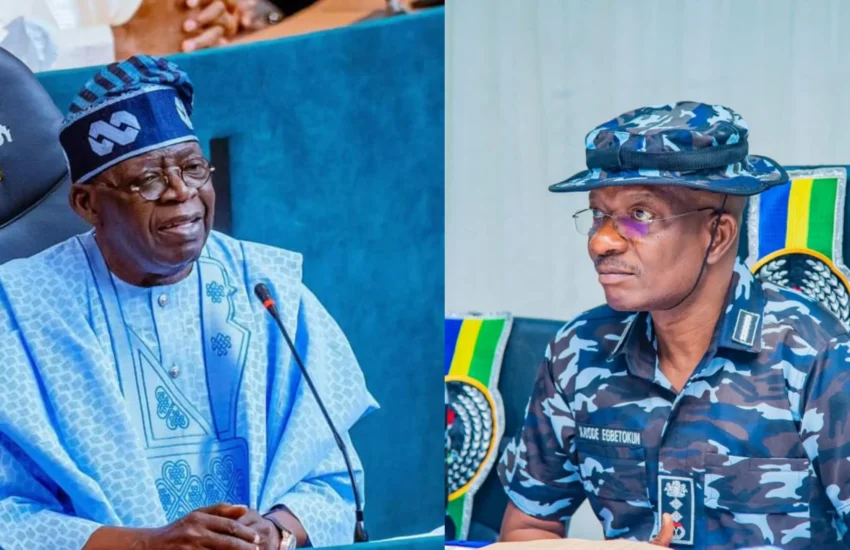
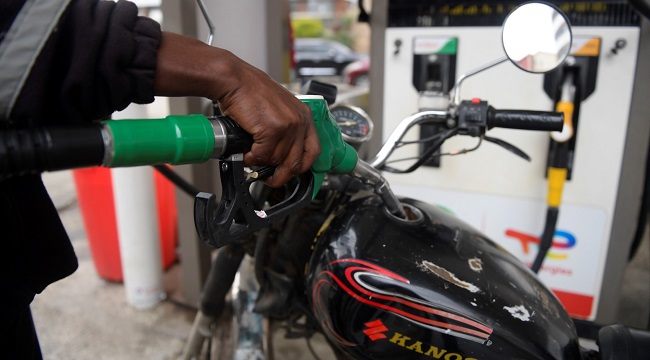
On October 1, 2026, President Bola Ahmed Tinubu in an independence day address to Nigerians announced what he called petrol discount aimed at reducing the cost of public transportation, thereby cushioning the effect of the economic hardship in the country.
Details of the Federal Government’s 30-day petrol discount plan and price-stabilization measures were later announced by the Minister of Finance and Coordinating Minister of the Economy, Taiwo Oyedele.
Key aspects of the plan were as follows:
1. Duration: Runs for 30 days from October 8 to November 7, 2026.
2. At-Cost Pricing: Petrol is dispensed at cost at designated Nigerian National Petroleum Company Limited (NNPC) retail filling stations rather than via a traditional blanket subsidy.
3. Priority Group: Public transport operators nationwide receive priority access under the arrangement.
4. Price Ceiling Proposal: The government is negotiating a monthly-reviewed ceiling of around ₦1,350 per litre on the ex-gantry or landing cost of petrol to buffer against exchange rate and global crude oil volatility (though this does not mean every pump price automatically drops to ₦1,350).
5. Additional Measures: The plan includes increasing forward sales of crude oil to domestic refiners to stabilize local supply and pricing.
6. Post-Scheme Review: The government stated it will evaluate the outcome of the 30-day initiative through NNPC reports to determine whether further extensions or interventions are required.
Despite what seemed a laudable plan and an attempt to reinforce the “subsidy is gone” era declared by Tinubu on May 29, 2023 when he assumed office as President, there is no sign that transportation and food prices have dropped. Neither has anyone, including transporters, bought fuel at the approved price of N1,350 from any of about 900 petrol stations owned by the NNPC.
Instead, the cost of petrol in some stations, owned by independent marketers have spiked to as high as N1,900 in some instances. Cost of food and transportation takes a chunk of household income with no sign that this precarious situation would abate anytime soon.
The development has pitched organized labour and opposition parties against the government. On one hand, there is stiff argument as to whether the petrol discount was another form of subsidy or not. Labour on another hand maintains that the price of petrol should not be more than N500.
NLC’s ultimatum on minimum wage draws battle line with FG
The organized labour finally drew the line in its demand for reduction of the pump price of petrol and a fresh push for a review of the national minimum wage. In a firm resolution coming out of its National Executive Council (NEC) meeting, the Nigeria Labour Congress (NLC) issued a strict 14-day ultimatum to the Federal Government, demanding an immediate reduction in pump prices and the reopening of national wage negotiations.
At the heart of the current standoff is the NLC’s ultimatum on renegotiating a new minimum wage. Labor leaders argue that relentless inflation and escalating fuel costs have completely eroded the purchasing power of Nigerian workers, rendering recent wage structures obsolete before the ink hadn’t taken even dried.
The Congress insists that the Federal Government must immediately roll back petrol prices to levels seen when the current national minimum wage framework was instituted in 2024. Without a corresponding price reduction at the pump, organized labour contends, that any previous wage gains remain a paper victory swallowed whole by soaring transportation and food costs.
Labour’s ultimatum also demands full implementation of outstanding agreements, including settlement terms reached with the Joint Health Sector Unions (JOHESU) and requirements laid down by the Joint Public Sector Negotiating Council.
The government’s recent announcement of a temporary 30-day fuel discount for public transporters and a proposed ₦1,350 per liter price cap has done little to appease union executives, who view piecemeal palliatives as inadequate temporary bandages on a systemic economic wound.
By tying petrol prices directly to the minimum wage, the NLC’s ultimatum signals a shift from defensive bargaining to proactive economic resistance. The message from Labour headquarters is clear: the government must either stabilize the cost of living or adjust worker compensation to match macroeconomic realities.
With the 14-day clock ticking, failure to reach a negotiated compromise will leave the NLC’s governing organs with no choice but to activate nationwide industrial action. As the NLC’s ultimatum approaches, the burden now shifts to federal negotiators to prevent a full-blown economic freeze by making a shift on the minimum wage.
The Trade Union Congress, TUC aligns completely with the NLC, signalling a possible showdown between organized labour and the Federal Government. With few months to the 2027 elections, there is a possibility that the ruling All Progressives Congress, APC may be going into the exercise with its reputation badly bruised and an electorate whose anger is fueled by hunger.
NNPC extends N66 petrol discount, adds diesel to promo
The Nigerian National Petroleum Company Limited (NNPC Ltd) extended a ₦66-per-litre discount promotion on petrol by another week and expanded the offer to include diesel. Both promo extends till November 14, 2026.
NNPC announced the extension in a brief notice urging motorists and other consumers to visit participating filling stations to take advantage of the offer.
“One more week. More ways to save,” the company said, confirming that the ₦66 discount on Premium Motor Spirit (PMS), commonly known as petrol, would continue for an additional week.
NNPC also announced the inclusion of Automotive Gas Oil (AGO), or diesel, in the promotion, extending the offer to consumers of the two major petroleum products. “Visit any participating station to take advantage,” the company advised.
The promotion was initially scheduled to run from October 1 to November 7, 2026, with customers encouraged to use an app when purchasing petrol at participating NNPC stations nationwide.
NNPCL said customers across the country had begun taking advantage of the offer, sharing highlights of activities at several stations on the first day of the promotion.
NNPCL subsequently encouraged motorists to continue fuelling and transacting through the NNPC Fuel App throughout the promotional period to benefit from the discount. With the extension and the inclusion of diesel, the promotion covers consumers of both petrol and AGO.
Yet, there has been no downward review of transportation costs. Not has soaring food prices abated.ore worrying is the slow pace of rol poi but of CNG buses by states as promised by Tinubu in the independence day. Even in the few where compliance has been identified, living standards remain abysmally low. The poor continue to have the short end of the stick.
Atiku challenges Tinubu’s petrol discount, demands full disclosure of NNPC financial impact
An aide to former Vice President Atiku Abubakar, Paul Ibe, challenged the Federal Government’s explanation that its petrol discount programme through NNPC Retail does not involve spending public money.
In a statement addressed to the Chairman of the Presidential Committee on Fiscal Policy and Tax Reforms, Taiwo Oyedele, Ibe argued that the government’s position was misleading because NNPC Retail is owned by NNPC Limited, which belongs to the Nigerian Federation.
He said although there is a technical difference between a discount and a subsidy, the claim that “no public money is involved” does not reflect the true ownership of NNPC Limited.
According to him, NNPC Limited recently declared ₦5.8 trillion as dividends for the 2025 financial year and questioned whether reducing NNPC Retail’s profit margin would not affect revenue due to the Federation.
He maintained that any reduction in the company’s earnings could lower the dividends eventually paid into public coffers unless increased sales make up for the shortfall.
Ibe said there is a clear difference between saying no money was taken from the federal budget and claiming that “no public financial interest is involved.” He added, “Public corporate revenue is part of Nigeria’s wealth.”
The Atiku aide also questioned why the petrol discount was limited to just over 900 NNPC Retail outlets while thousands of independent filling stations across the country were excluded.
He asked, “What happens to millions of Nigerians who patronise other marketers’ outlets totalling about 21,781? And what happens when the discount expires on October 31?”
Ibe further argued that when Atiku Abubakar earlier proposed what he described as a transparent, production-based subsidy to make locally refined petrol cheaper, the proposal was rejected by the current administration.
According to him, the present policy has strengthened Atiku’s position that government policies should focus on easing the burden on citizens rather than debating economic terms.
He said Atiku’s proposal seeks broader and more sustainable support for local refining instead of what he described as a temporary intervention limited to one retail network.
While welcoming efforts to reduce the cost of petrol, Ibe insisted Nigerians deserve lasting solutions that benefit everyone. He also called on Oyedele to “publish the financial implications of the discount, including its effect on NNPC Retail’s profitability and potential Federation dividends.”
He concluded by saying, “Governance is about improving lives, not winning arguments over the vocabulary of economic hardship.”
The Federal Government has consistently maintained that the temporary petrol discount introduced through NNPC Retail is a commercial pricing decision and not a return to the fuel subsidy regime, which President Bola Tinubu removed in May 2023 as part of wider economic reforms.
Meanwhile, a civil society group, Centre for Social Justice (CSJ) notes said the debate by stakeholders, including organized labour, political parties, organized private sector and civil society on the appropriateness of the removal or continuation of fuel subsidy has been acknowledged by it.
The group noted that “The fundamental case for subsidy removal in the last fifteen years had been that the subsidy regime was riddled with corruption. It was supposed to free up resources for governments to invest in infrastructure, security and human capital development, etc.
*However, subsidy has been removed but the Federal Government of Nigeria (FGN) still borrows massively and fails to fund the budget. Nigerians are faced with high fuel prices due to the removal of fuel subsidy. Nigerians have borne the pain without the promised benefits accruing. But massive corruption remains in the sector including industrial scale crude oil theft, a corruption that eats up more resources than the subsidy savings. NNPC still spent over $8billion for an undefined “energy security”.
CSJ argued that the announcement by the FGN through the Minister of Finance and Coordinating Minister for the Economy for a price modulation mechanism to ensure that petrol price stabilizes at not more than N1350 falls short of the expectations of Nigerians who desire a reasonable relief that reduces the hardship.
“Nigerians were buying petrol at about N800 before the start of the America-Israel-Iran war. The expectation is that any relief measure should revert fuel price to the N800 figure with a sequenced detailed plan to further reduce the price between N400-N500 per litre in the medium term”.
It proposed reduction through the following measures:
• Set a domestic price cap regime for crude oil indexed on the desired official policy price per litre of different petroleum products and the Nigerian standard of living. This will produce a price lower that the international price of crude oil.
• Empirically determine the number of barrels per day needed by local refineries to satisfy Nigeria’s refined petroleum product needs. Take cognisance of the fact that crude oil produces over 21 derivatives – more than petrol, diesel, kerosene and aviation fuel.
• Deliver crude oil to local refineries at the reduced price.
• Ensure that refined products are not smuggled or diverted away from Nigeria. Just meticulously police the borders.
• Concession the four NNPC refineries to core investors with technical, financial and managerial capacity to start immediate refining of crude oil.
• Recover all monies stolen under the pretext of turn around maintenance of the refineries, especially the $3billion stolen under the Muhammadu Buhari regime.
Eze Onyelpere to the Lead Director of CSJ contends that the proposal is feasible considering that FGN declared a savings of N15.8trn between June 2023 and December 2025 which amounts to N6.32trn a year. “If FGN cuts the subsidy by 50%, it will amount to a forfeited revenue of N3.16trn a year. An expenditure or forfeited revenue of N3.16trn a year (by all the tiers of Government in Nigeria) reduces fuel prices by 50%, an investment greater than any imaginary illusionary macroeconomic indicator achievement”.