Twenty-six years after the abortion of military dictatorship, Nigeria is yet to experience any form of democracy. What has taken place since May 29, 1999, is mere civil rule; civil rule occasionally punctuated with the tyranny of the President Olusegun Obasanjo years.
After the breathing space provided by the era of President Umar Musa Yar’Adua in 2007 and the administration of President Gooduck Jonathan up to 2015, the Buhari regime returned the country to the path of tyranny.
Now, the situation is getting worse under the BAT and Company with the constitution being messed up by those who wallow in might is right.
For those who know better, tyranny is a form of government characterised by the arbitrary and unrestrained exercise of power, often involving the abuse of authority. It generally refers to a cruel, harsh, and unfair government where a single person or a small group, like those of the National Assembly, as shown during the emergency rule display of shame, holds unlimited power, often using it oppressively and unjustly.
Throughout history, numerous examples of tyranny have emerged, including those of various dictatorships and oppressive regimes like the one currently manifesting in Nigeria.
The way things are going in Nigeria since the infamous declaration of May 29, 2023 that “fuel subsidy is gone’, veterans of the Gani Fawehinmi Joint Action Congress (JACON) and the Olisa Agbakoba United Action for Democracy (UAD), may have to regroup for a battle to rescue Nigeria from tyranny, and usher in a strong constitutional framework.
Such a framework must be anchored on an active citizenry, and the protection of individual rights. These are, unarguably, very crucial in preventing a post-BAT tyranny, and ensuring a just and equitable society.
In today’s Nigeria, is civil rule not under pressure and on the defensive? Before 2015, the anti-liberal politicians and intellectuals moved against the liberalism of the Jonathan variety. They charged that liberalism had become a cloak for the “clueless” elites of the Peoples Democratic Party, PDP, that couldn’t rescue the Chibok girls.
The emergent ‘progressive’ nationalists with Buhari on the saddle at Aso Rock, after kicking out Jonathan, grounded the national economy and turned Nigeria into the world’s poverty capital.
Since the exit of PDP, the progressive civil rule of the APC, or better still, the tyrannical
‘democracy’ of the APC has inherent structural weaknesses that have exacerbated the sufferings of the people.
A wise leadership can only seek realistic ways to mitigate the excruciating pains of the citizenry, pending the outcome of constitutional reforms, and not to be rubbing salt on injury.
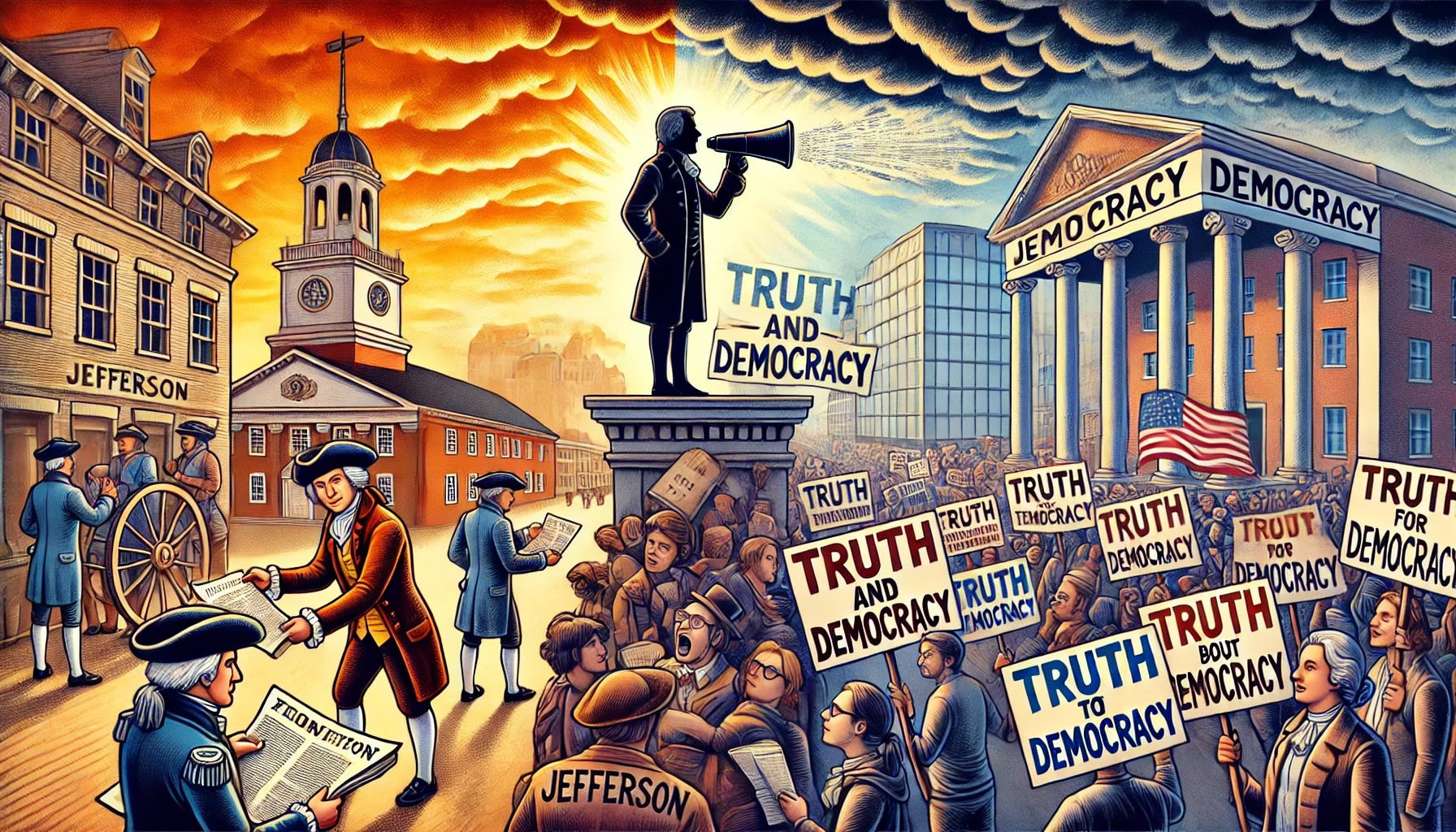
The United Nations of which Nigeria is a member, has stated that democracy is its core value, and that it supports democracy by promoting human rights, development, peace and security. In the 79 years since the UN Charter was signed, the UN has done more to support democracy around the world than any other global organisation.
The UN promotes good governance, monitors elections, supports civil society to strengthen democratic institutions and accountability, ensures self-determination in decolonised countries, and assists in the drafting of new constitutions in post-conflict nations.
Its activities in support of democracy are carried out through the United Nations Development Programme (UNDP), the United Nations Democracy Fund (UNDEF), the Department of Peace Operations (DPO), the Department of Political and Peacebuilding Affairs (DPPA), the Office of the High Commissioner for Human Rights (OHCHR),and the United Nations Entity for Gender Equality and the Empowerment of Women (UN Women), among others.
Unfortunately, good governance and credible elections are scarce commodities in Nigeria. Quite recently, former President Olusegun Obasanjo declared that democracy has failed and is dying in Africa. He said to salvage the situation, democracy must be addressed in the context and content of Africa.
He was speaking at the 60th birthday colloquium of Emeka Ihedioha, a former Imo State Governor and one time Deputy Speaker of the House of Representatives. Obasanjo argued that democracy is not just failing but dying due to its disconnect from the continent’s values and realities.
The former president lamented that the judiciary has failed to salvage the situation. According to him, the African governance system has become one where leaders “grab everything illegally and corruptly” while telling the people to “go to court”, adding, “if you are talking about democracy failing in Africa, democracy in Africa has failed. And why has it failed?
“Because in context and in content, it is not African. It does not have any aspect of our culture, our way of life, what we stand for, what we believe.
“Today, we have democracy, which is a government of a small number of people, by a small number of people over a large number of people who are deprived of what they need to have in life. That is not democracy that will endure.
“It is seen as what I can grab. What sort of democracy brings you and you grab everything illegally and corruptly and you say go to court? When you know that even in the court, you cannot get justice? It’s not that democracy is failing, democracy is dying and if we are going to make democracy not to die, we have to look at it in the context and in the context of Africa. I hope that we will get to that stage so that democracy which will deliver will be the democracy that we will have in Africa.”
A renowned playwright and Nobel Laureate, Prof. Wole Soyinka, has chided President Bola Tinubu’s decision to declare a state of emergency in Rivers State, stating that it undermines the spirit of federalism.
Tinubu imposed emergency rule on Tuesday, March 18, citing political instability in the oil-rich state. He also suspended Governor Siminalayi Fubara, his deputy, Ngozi Odu, and all members of the state House of Assembly for an initial period of six months, appointing Ibok-Ete Ibas, a retired naval chief, as the state’s sole administrator.
Speaking to The Africa Report, Soyinka argued that Nigeria’s constitution grants the president excessive powers, making the country’s federal system more centralised than it should be.
“If it is constitutionally right, then I think it is about time we sat down and amended the constitution to make sure that it operates as a genuine federal entity”, he said.
Soyinka further questioned the wisdom of Tinubu’s decision, suggesting that a true federal system should prevent such unilateral actions. “The debate will go on whether this was, in the first place, a wise decision, but in terms of fundamental principles, I believe that this is against the federal spirit of association”, he added.
Soyinka reiterated his long-standing call for a national conference, which he believes would pave the way for a truly representative constitution.
“The system we are operating right now is not the best for a pluralistic society like ours. The federal spirit of association is a cardinal principle… right now, in principle, this action is against the federal imperative”, he said.
Interestingly, Soyinka has consistently advocated for a constitutional overhaul, arguing that Nigeria’s current structure does not reflect true federalism. His latest remarks add to the growing debate over Tinubu’s emergency declaration and its implications for democracy and governance in Nigeria.
For now, the oppressed peoples of Nigeria have to unite to free themselves from the new form of tyranny and neglect.