




The Southerner — OPEN EYES
Thursday, April 23, 2026
By Mohammed Jamiu Adoke
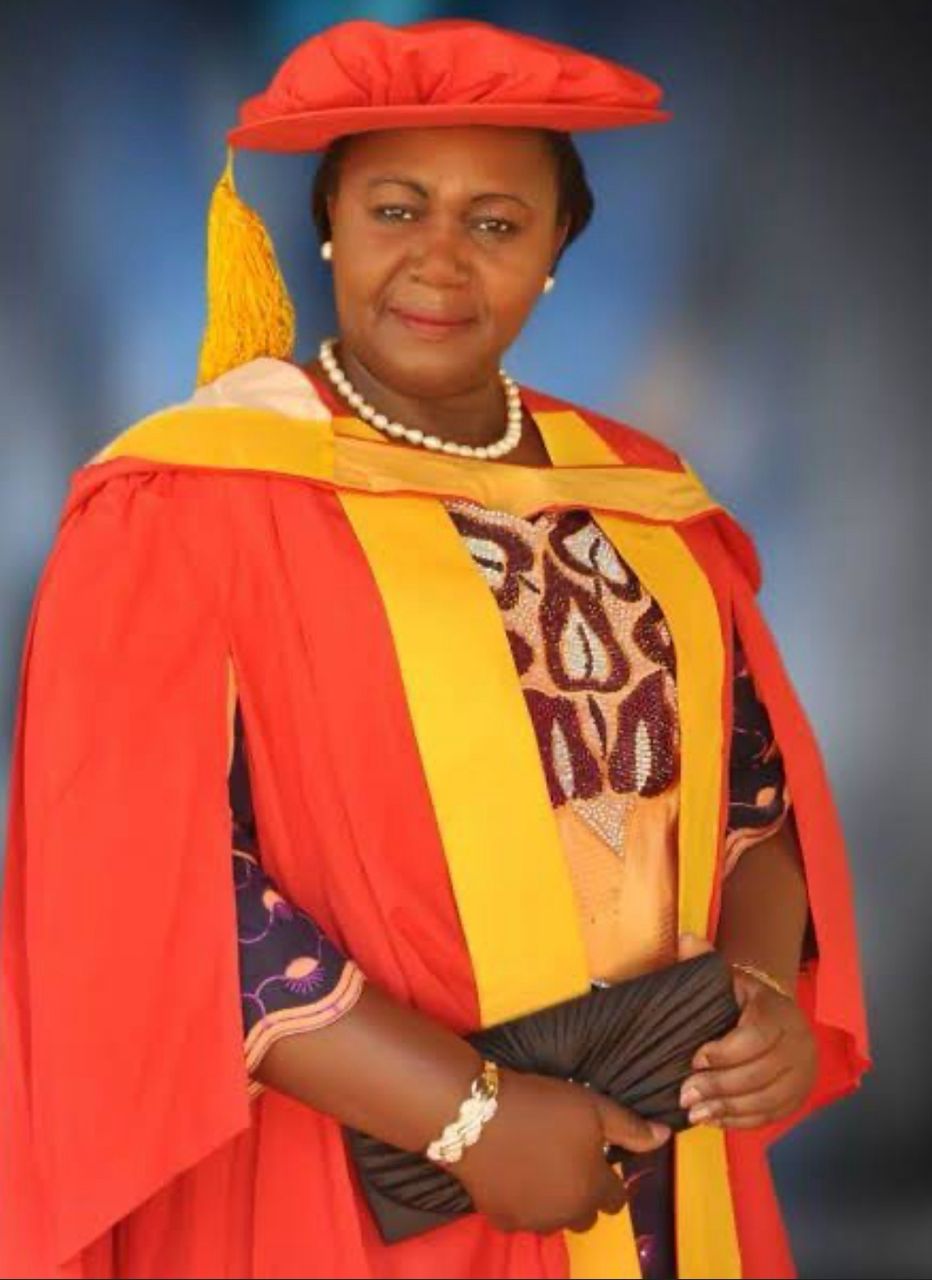
Today’s episode of “Youth Voices, N ational Choices” shall celebrate a woman who stands tall in the field of academic and leadership. There are lives that are lived quietly, not because their owners lack greatness, but because greatness, in its truest form, rarely announces itself with fanfare.
The life of Professor Patricia Manko Lar is one such life, a story built not on noise, but on decades of tireless dedication, intellectual vigour, compassionate leadership, and an unrelenting commitment to the development of Nigeria’s higher education system.
Born on January 1, 1964, in Langtang, Plateau State, she has journeyed from the classrooms of Ahmadu Bello University, Zaria, through the laboratories of the University of Lagos and postdoctoral research at the Institute of Human Virology in Baltimore, Maryland, USA, to the highest administrative corridors of Nigerian academia.
Her’s is a story that deserves to be told and celebrated, not merely within the walls of the university, but across every household in Nigeria that dares to believe in the power of merit, gender equity, and transformational leadership.
Professor Patricia Manko Lar’s academic credentials alone would distinguish her in any gathering of scholars, home and abroad. A Professor of Medical Microbiology at the University of Jos since 2015, she holds a B.Sc. with Honours in Microbiology from Ahmadu Bello University, and both an M.Sc. and a Ph.D. in Microbiology from the College of Medicine, University of Lagos, qualifications deservedly earned in all ramifications.
With over 40 peer-reviewed publications spanning infectious diseases, antimicrobial resistance, HIV/AIDS molecular characterisation, and phytomedicine (the science of plant-based healing), she has spent her career tackling the health challenges that afflict Nigeria’s most vulnerable populations. Her postdoctoral fellowship under the prestigious NIH-Fogarty AIDS International Research and Training Program at the University of Maryland brought her work to global attention, and her election as a Fellow of the Academy of Natural Science and Engineering in Nigeria (ANSEN) in 2025 crowned a research career of extraordinary depth and consequence.
Long before her name became synonymous with institutional leadership at the national level, Professor Lar had already established herself as an administrator of uncommon skill within the University of Jos. She served twice as Head of the Department of Microbiology between 2006 and 2010, and again from 2012 to 2017, building a department where over five academic staff earned their PhDs under her mentorship, where laboratory capacity was strengthened, and where more than 400 students received quality training.
As Acting Director of Linkages from 2014 to 2017, she architected the very structural framework for international partnerships at the university. As Project Director of the Jos-Carnegie Partnership Project from 2008 to 2013, she managed a grant portfolio worth approximately $4.5 million, digitising a decade of student records, establishing the university’s Office of Research, promoting the Female Support Initiative that disbursed over N73 million to more than 3,500 female students, and achieving international webometric recognition that ranked the University of Jos 2nd in Nigeria in 2007. This was not merely administration, it was transformation, delivered with precision and care.
I was not surprised when in February 2025, the Federal Government appointed Professor Patricia Manko Lar as Acting Vice-Chancellor of the University of Abuja (now Yakubu Gowon University). It is common knowledge to everyone associated with the Univeristy of Abuja that she inherited an institution navigating significant institutional turbulence. Lesser administrators might have opted for caution; she chose courage. Within her six months tenure, her impact was both swift and substantive. First of, she ensured that the elusive peace and harmony were restored to the University Community.
She oversaw the launch of brand-new 18-seater Hummer staff and student shuttle buses, dramatically improving campus mobility for thousands of staff and students. She laid the foundation stones for two critical facilities; the Centre for Sickle Cell Research and Training, a facility with profound implications for a nation where sickle cell disease claims thousands of young lives annually, and the Central Laboratory Complex’s administrative building, a hub that promises to anchor biomedical and scientific research for generations.
These were not ceremonial gestures; they were acts of institutional foresight made tangible in brick, mortar, and purpose.
Beyond infrastructure, Professor Lar demonstrated a mastery of what scholars call “adaptive leadership”, the capacity to stabilise institutions under stress and chart a path forward through reform rather than retreat. She secured TETFund support to equip laboratories in biomedical sciences and engineering, bringing modern research facilities within reach of students who had long deserved them. She launched computer-based examinations and e-learning platforms, modernising academic delivery in an era that demands digital fluency.
She addressed hundreds of pending staff welfare concerns and facilitated long-overdue academic promotions, sending an unambiguous message that the human beings behind the institution matter as much as its physical infrastructure.
Perhaps most significantly, she reconciled the university management with all major staff unions: ASUU, SSANU, NASU, and NAAT, restoring industrial peace to a campus that had known too much discord. She also initiated engagement with a 3-megawatt hybrid solar farm to reduce the university’s crippling dependence on the national grid.
These achievements, accomplished within months, speak of a leader who came not to manage, but to heal and to build.
To celebrate Professor Patricia Manko Lar only for what she has done would, however, be to miss the deeper significance of who she is. In a nation where women are systemically underrepresented in the upper echelons of academic leadership, her career trajectory challenges every excuse that has ever been offered for that absence. The University of Jos (her home institution of over three decades) has never had a female Vice-Chancellor in its 55-year history.
The University of Abuja’s story has now been shaped, however briefly, by the steady hand of a woman who brought measurable change without spectacle or self-promotion. She is a Fellow of the International Women’s Forum Leadership Foundation, a recipient of the Women Achievers Award, and the winner of the Award of Enduring Excellence in Leadership from the Centre for Gender and Women Studies at the University of Jos in 2025.
Each of these recognitions is not merely a personal honour; it is a marker placed on the map for every young woman in Nigeria who has been told, explicitly or otherwise, that the corner office is not for her.
There is also something profoundly moving about the sheer consistency of Professor Lar’s service to Nigeria beyond the walls of any single institution. She has served on the Governing Councils of the Plateau State University, the Plateau State Polytechnic, and the College of Education in Gindiri. She has served as Vice President and former Secretary-General of the West Africa Research and Innovation Management Association (WARIMA), elevating Nigeria’s standing in continental academic governance networks spanning Nigeria, Ghana, Sierra Leone, Gambia, Côte d’Ivoire, Burkina Faso, and Togo.
She participated in the Science Granting Council Initiative, a pan-African effort funded by Canada’s IDRC and South Africa’s NRF to strengthen research management across Sub-Saharan Africa. At every level, local, national, and continental — she has given more than she has taken, served more than she has sought, and built more than she has claimed. In her, Nigeria has not merely produced an academic; it has produced a national institution in a human form.
Nigeria deserves to celebrate Professor Patricia Manko Lar loudly, unreservedly, and without delay. Not merely because of what she has achieved, remarkable as those achievements are, but because of what she represents; the possibility of a different kind of leadership, one grounded in scholarship, guided by equity, animated by service, and unafraid to act where action is needed most.
She has shown that gender is no barrier to excellence, and that excellence carries no geography, hers has flourished in Plateau State, in Abuja, in Baltimore, in West Africa, and wherever the cause of knowledge and justice has called.
To the women and girls of Nigeria who watch and wonder whether it is possible to rise, to lead, to endure, and to matter, Professor Patricia Manko Lar’s life offers the most powerful answer imaginable, it is not only possible, it has already been done. Nigeria, stand and celebrate this extraordinary daughter of yours. She has more than earned it! May the sun shine tomorrow…