



At petrol stations across Abuja, Lagos, Kano and Kaduna, Nigerians are once again doing the painful arithmetic of survival. Converting fuel prices into transport fares, transport fares into food prices, and food prices into the shrinking value of a day’s labour comes with a familiar pain in the heart of an ordinary Nigerian.
The frustration is real, it is justified, and it deserves to be spoken plainly rather than managed with slogans. But honesty also demands that we name the true source of this latest wave of pain accurately, rather than reflexively pinning every hardship on Aso Rock.
What Nigerians are living through since late February 2026 is not primarily a story of domestic mismanagement, it is a story of a nation caught in the blast radius of a war it did not start and cannot end.
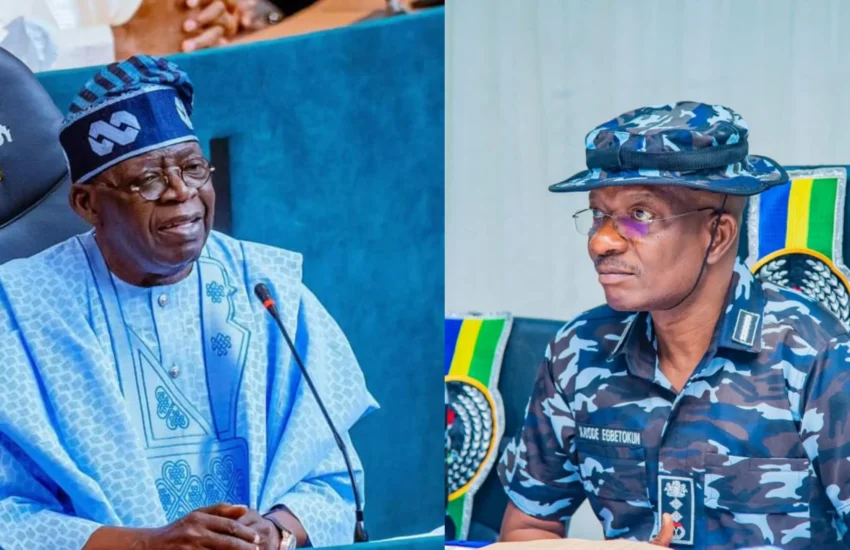
To understand where we are, we must remember where we came from. When President Bola Ahmed Tinubu removed the petrol subsidy on May 29, 2023, the shock was immediate and brutal; pump prices leapt from roughly N197 to well over N600 within weeks, and Nigerians bore that pain with understandable fury. I still have not gotten over the pain, as that fateful day remains the last time I filled the tank of my car to brim! Yet what followed matters too.
Over the ensuing months, prices climbed further but then found a plateau, settling for close to two years in a band around N800–N900 per litre as the Dangote refinery came aboard and began competing with imported products, and as government and marketters adjusted to a deregulated market.
Whatever one thinks of the subsidy removal itself, that period of relative stability was not an accident. It reflected a domestic market slowly finding its footing. It is important to hold onto that fact, because it shows this administration is capable of steering outcomes when the variables are within Nigeria’s control.
That stability was upended by forces entirely outside Nigeria’s borders. On February 28, 2026, the United States and Israel launched joint military strikes on Iran, opening a regional war that has since drawn in Gulf states, Lebanon, and shipping lanes that the entire world economy depends on. I
ran responded with missile and drone strikes across the Gulf, causing unprintable havocs that most western-controlled media wouldn’t reveal. And traffic through the Strait of Hormuz which is the corridor through which a fifth of the world’s oil normally passes was thrown into chaos.
Brent crude, which had traded closer to $70–$75 a barrel before the war, has since pushed past $100 and even $107 a barrel as at Tuesday, this week.
This is not a Nigerian phenomenon or a Tinubu-made crises; it is why American motorists are now paying diesel prices opposition leaders describe as record highs, and why fuel and energy costs have risen “all over the world,” in the words being shared by ordinary citizens themselves.
Truth be told, a country like Nigeria that imports the bulk of its refining inputs and prices its domestic product off international crude benchmarks cannot wall itself off from a shock of this size, no matter who sits in the presidency.
Again, as if the Strait of Hormuz disruption were not enough, the crisis has now widened. In recent days, Iran-aligned Houthi forces in Yemen seized the strategic Red Sea port city of Mocha and pushed toward the Bab al-Mandeb strait which is the narrow waterway through which roughly a tenth of global trade moves. Shipping companies are rerouting, insurance premiums for tankers are spiking, and Gulf producers are watching two of the world’s most important chokepoints come under simultaneous pressure.
Even Nigeria’s own Dangote refinery, a genuine national asset, has had to raise its ex-depot petrol price multiple times in recent weeks simply to keep pace with the rising cost of crude and the naira’s exposure to a more expensive dollar. To understand better, this is the mechanism, laid bare; global crude goes up, landing costs go up, and pump prices in Lagos, Abuja and beyond follow, not because a policy failed, but because the input price of the product itself has changed for everyone on earth.
Here is where the distinction that matters most must be drawn, and it is one every Nigerian can test against their own experience. Where the causes of hardship have been genuinely domestic, as experienced last year; the price of garri, tomatoes, rice, and other food staples, the availability of foreign exchange for imports, the state of local supply chains, President Tinubu’s administration has taken interventions, from duty waivers on food imports to engagement with grain reserves and targeted palliatives, and Nigerians have, in many markets, seen food inflation ease from its earlier peaks. That is a domestic lever, pulled by a domestic hand, and it is fair to credit or criticize government for how it is pulled.
On the other hand, Energy prices tied to a war of aggression between the United States and Israel on Iran are a different category of problem entirely. To collapse the two into one unrelated indictment of “APC failure” as some opposition voices and online commentators are doing in this election season, is neither accurate nor fair to the public they claim to serve.
It also risks something worse; teaching citizens to demand solutions from the Federal Government that she simply does not have the power to deliver, which only deepens disillusionment when prices do not fall on command.
In retrospect, none of these should read as a dismissal of the suffering among ordinary Nigerians, because the suffering is not in dispute, but only its cause is. What Nigerians need now is not blame theatre but a serious, honest conversation about coping mechanisms while this war runs its course. That means accelerating the rollout of CNG-powered buses and conversion kits that several state governments and the federal Presidential CNG Initiative have already begun distributing, so transport costs decouple somewhat from petrol and diesel prices.
It means expanding targeted transport and energy palliatives to the working poor rather than broad, leaky subsidies that historically enriched middlemen more than motorists. It means the Central Bank and fiscal authorities working to keep the naira as stable as possible, since exchange rate pressure compounds every imported cost. It means genuine transparency from the Dangote refinery and NNPC on pricing formulas, so citizens can see the arithmetic rather than suspect collusion.
And it means Nigeria, alongside fellow OPEC and African producers, using every diplomatic channel available to press for de-escalation in the Middle East, because ultimately the surest relief for Nigerian pump prices will come not from a policy in Abuja but from peace in the Gulf.
To this end, Nigerians have endured worse storms with resilience and solidarity; what this moment demands is clear-eyed empathy from leaders and clear-eyed honesty from critics; not a contest over who can shout “government failure” loudest while the real fire burns thousands of kilometres away. To do this, requires unquestionable patriotism! May the sun rise tomorrow.