


(Published by The Southerner on Saturday, May 10, 2025)
By Emeka Nwokocha
The shattering noise about marginalization of Ndigbo in the Nigerian governance system tends to exonerate Igbo political leaders from contributing to the problems afflicting the Igbo nation, culminating in infrastructure deficit, worsening poverty, economic stagnation, and falling standard of living.
Suffice it to say that since the brutal civil war ended in 1970, Ndigbo’s political relevance in the contraption called Nigeria has suffered a huge setback, just as incontrovertible proof of systemic shortchange of their kith and kin by the Nigerian government, with regard to political appointments, creation of states, citing of federal institutions, construction of roads, upgrading of infrastructure, and civil service employments evidently dot the chequered Nigerian history.
Beyond Ndigbo’s marginalization cry, it is pertinent to say that the actions or inactions of Igbo political leaders have further worsened the ordeal of Ndigbo, even when the relics of Ndigbo’s under-development stare them in the face.
Without mincing words, Ndigbo’s political leaders have done more harm than good to their people Their stock in trade has been more profound in fanning the embers of disunity propitiated by gross misgovernance, self-aggrandizement and kleptomaniac ideological leaning.
Small wonder, the remote and warped ideologies Igbo political leaders bring to governance crudely and cruelly abort potent, proactive and smart innovations often initiated by innovative and patriotic Igbo sons and daughters to make the Igbo nation great again.
This lack lustre administrative order of Igbo political leaders has since become a clog in Ndigbo’s match to greatness till this day. It remains an albatross to our collective growth and our desire to reclaim political power at the centre.
55 years after the civil war ended, Igbo political leaders seem not to have learned any good lesson from that hateful war that caused a collosal damage to the economy, infrastructure and political strongholds of Ndigbo.
In the same vein, since democratic government re-birthed in Nigeria, in 1999, Igbo political leaders have callously bungled brilliant opportunities to harness in full scale, the potentials of Ndigbo to launch an industrial and economic revolution in Igbo land.
Not forgetting the bitter and horrifying experience Ndigbo had during the civil war, and still being hounded by their “haters” who wouldn’t want to see them shine in the wobbling Nigerian state, one would expect Igbo political leaders to use their tongues to count their teeth!
Igbo political leaders should know that the onus of strengthening unity among Ndigbo, pioneering topnotch infrastructural development, and eradicating poverty in Igbo land squarely rest on their shoulders.
From that very day – January 15, 1970, that the bombs stopped booming, that, the shellings stopped pounding and the guns stopped sounding in Igbo land, I mean the very day the war officially ended, Igbo political leaders ought to have put on their thinking cap, and hit the ground running, with modest policies that would ignite industrial revolution in Igbo land.
Most importantly, they ought to have strengthened their capacity in building industries and venturing into inventions and innovations to power Ndigbo’s innate scientific and technological endowment towards driving industrialization in Igbo land on a large scale.
Ndigbo are richly endowed and industrious and they have in their “Shokoto” what it takes to build a great nation. Only if their potentials and resourcefulness are exhaustively harnessed by political leaders who could broach a great vision for the Igbo nation.
Even at the global front, it is no exaggeration to say that the Igbo race has consistently made its mark in scientific innovations and patented technological inventions that have stunned the world.
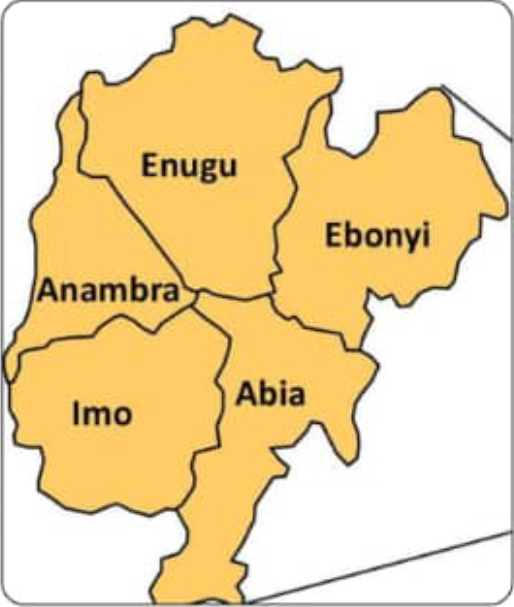
To be precise, there are glaring indicators of failed governance in the five Igbo states: Abia, Anambra, Ebonyi, Enugu, and Imo, with attendant failings of Igbo political leaders to make Igbo land an industrial hub.
Little wonder, the great vision broached by notable Igbo leaders in the First Republic to make Igbo nation the epicenter of civilization and technological breakthroughs have remained jinxed till this day, just as excruciating poverty buoyed by forlorn hope have become the lot of the masses of Igbo nation.
This writer weeps for Igbo political leaders who have had brilliant and bouyant opportunities, but grossly lack foresight and ingenuity to craft a new vision for Igbo civilization, to jumpstart a progressive phase of infrastructural development that will prove to the world that Ndigbo have the stuff to call the shots in technological and scientific body of knowledge.
One could imagine the huge transformation that would’ve happened in the five Igbo states if the political leaders had discarded their proclivity for selfish pursuit and clannish politicking, and given their best to making world class cities..
That way, Owerri would’ve been a sprawling city in the class of Dallas, San Diego or Alaska; Aba would’ve undergone transformation and become the Japan of Africa; Onitsha would’ve become famous as a sprawling world class commercial city and business behemoth in Nigeria in the frame of Guozhou of China; Umuahia would’ve become a bursting city in the class of Tokyo; Enugu would’ve become a tourist attraction in the likes of Paris; Awka would’ve taken the form of Istanbul, while Abakiliki would’ve metamorphosed to become the Seoul of Africa.
In the same light, just as Lagos is the economic behemoth of Nigeria currently, the economic power of the Igbo states would’ve surpassed that of Lagos state long ago, then there wouldn’t have been any need for Ndigbo to waste precious time and energy rigmaroling in the ignominious failure, delusion, primitive politicking and abysmal system of leadership the Nigerian state is known for.
It is worrisome to note that Igbo political leaders have unashamedly chosen to go the dishonourable and corrupt way synonymous with Nigerian political leaders and their cohorts at different strata of governance.
Funnily, the messy economic situation of Nigeria doting her chequered history affirms the fact that Nigerian political leaders are not done with corruption, squandering of public funds, and stealing of the people’s common patrimony to satiate their greed and inordinate quest for ill-gotten wealth.
This sadistic development, no doubts, subjects the gullible citizens to perpetual agony, servitude, excruciating poverty and penury.
Against the backdrop of the tumbledown in the Nigerian economy currently, one would incontrovertibly say that “corruption virus” is at the verge of sinking Nigeria, the most populous black nation and largest producer of crude oil in Africa, but flaunts her despicable pedigree as a global epicenter of poverty, hosting 15% of the world’s extremely poor population, with over 106 million of its citizens living below $2.15 per day threshold in 2024.
Therefore, the question on the lip of this writer is, “Must Igbo political leaders, like Nigerian politicians steal and squander the common patrimony of the people of Ndigbo?”
Truth is, if Igbo political leaders were noble patriots, they would’ve extricated Ndigbo from the misery of unemployment, poverty and decadent economic situation ravaging the Nigerian state like a wild fire.
In the same token, if the Igbo nation has had visionary leadership since 1999, they would’ve piloted Igbo states out of the wobbling Nigerian economy which has become comatose in recent time.
As popular opinions would submit, if the Igbo political leaders had been wise, patriotic, prudent and sincere about leadership, they would’ve prioritized the welfare of Ndigbo and work assiduously towards making a great Igbo nation that would boast of a booming economy, state-of-the-art infrastructure, modern urban cities with network of first class roads, rail infrastructure and functional water transportation.
These are achievable feats Igbo political leaders could make happen over the decades after the end of the civil war in 1970.
As the clarion call for good governance and improved livelihood of Ndigbo continues to be on the front burner following decades of misrule by successive governments in Nigeria, the people of Igbo nation are passionately calling on Igbo political leaders to beat a detour from taking Ndigbo to perdition.
As a matter of public concern, Igbo political leaders should commence a new phase of leadership that promotes industrialization of Igbo states at unprecedented scale.
Ndigbo have been in the lurch for too long, resulting from ‘visionless’ leadership, just as the wellbeing of indigent Igbo masses has worsened over the decades.
The time has come for the masses of Ndigbo to take their destiny in their hands by compelling Igbo political leaders to jettison the exploitative Nigerian system of government famed for corruption, draconian policies, antagonizing of the citizens, despoliation of rule of law and subjecting the citizens to unbearable and perpetual suffering.