Sunday Southerner -Issues in the News
Thirty days. That is how long the government has decided Nigerians deserve relief at the pump, and then, in the words of the man who started the fuel subsidy debate, Atiku, “what happens on day 31?”
Let me start with the man who put the idea on the table. Atiku Abubakar did not wait for the crowd to catch up. On 18 September, in Abuja, he set out a production subsidy for petrol refined inside Nigeria, with imported fuel excluded, a fixed spending cap, a line in the budget, approval by the National Assembly, and independent audit. He asked for something rare in our politics: that the public be told what the subsidy costs and what it saves.
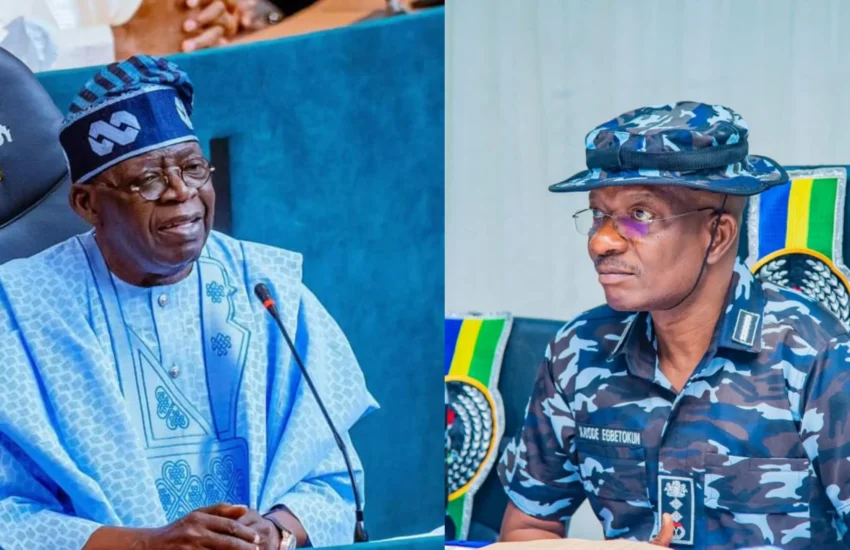
The idea was ridiculed, and the government called it unworkable. Then, on 1 October, the same government announced a 30-day discount at NNPC filling stations, with priority for public transport operators. Atiku’s reply, delivered on Friday, 9 October, at the inauguration of the ADC Presidential Campaign Council in Abuja, was sharp. “You heard ‘production subsidy’ and reduced it to a 30-day gesture,” he told the President.
“You are like a dull student who copied his classmate’s answer so blindly that he copied the classmate’s name at the top of his exam paper, and then demanded marks for original thinking.” Then came the question Nigerians are already asking: “Where is the rest of the answer?”
Here is the government’s side, and it deserves to be heard. Finance Minister Taiwo Oyedele has said the discount is not a return to the full fuel subsidy, but an arrangement for NNPC to sell petrol at cost for that period. Atiku describes it as a ₦50 cut per litre. Judge the two descriptions yourself. What is not in dispute is the calendar: thirty days.
Atiku’s argument at the council was not only about petrol. “Bola, thirty days cannot erase three and a half years of hardship,” he said. “Nigerians have heard your excuses and endured your failed promises.” He painted the daily reality in words any Nigerian recognises: “A bag of food that costs more each time we go to the market. A journey to work that eats up our salaries.
A business that cannot keep its lights on. A farm we may be too afraid to visit.” Then he put the line that the whole campaign now carries: “A speech about growth means nothing to a family that cannot afford dinner.” His plan answers that family directly. A “lasting, targeted plan,” in his phrase, that supports local refining and lowers the cost of moving goods, food and people. Atiku is not asking Nigerians to trust a slogan. He is asking them to hold him to rules.
That is where the second man in this ticket comes in. Rotimi Amaechi, Atiku’s running mate, has taken the same argument to the pump and to the people who ride the buses. On Channels Television’s *Politics Today* on 2 October, he set a test anyone can check: “If fuel comes down to 600 tomorrow, I will campaign for President Tinubu.” He promised to go to a filling station the next morning, cameras in tow, to buy fuel and see the price for himself.
The next day, he and Atiku stood at a filling station in Abuja, and the crowd gathered around them. Amaechi’s test is a fair one, and it is a good one for the nation to hold him to. Pump prices were reported above ₦1,000 at the time, which means the ₦600 mark is a long way off, and Nigerians will see for themselves whether the discount moves anything.
Amaechi also on the Channels television spoke about the staff of a shop, whose worker earns ₦70,000 a month and the fare from home takes ₦65,000 of it. “We don’t have two choices but just one to make: the choice to be alive,” he said, “because Tinubu’s presidency is the choice of death, and Atiku represents life.”
These are his words and his experience, and they explain why the cost of living is not an abstract number in this campaign.
Then comes the promise that gives the ticket it’s sharpest edge. On AIT’s *Democracy Today* on 1 October, Amaechi said: “If Nigeria does not begin to change, one year after we have come to office, come to me, I will resign.” He set out three priorities: security, education and the economy. He was clear that he was not promising everything would change in a year, only that Nigerians would feel a difference, a breath of fresh air in their daily lives. No incumbent has put a clock on himself in that way.
Set the two records side by side, and the contrast is plain. The President told the National Assembly that only 17.7 per cent of the 2025 capital budget had been released by the third quarter. The capital component has since been extended four times, the latest to 31 December 2026. Nigerians were promised a budget that would be delivered within its year.
They have been given rollovers. The government will answer with its own figures, including its claim of 84 per cent capital spending in 2024 when outside financing is counted, and those figures deserve a hearing. But a family’s transport fare still takes most of a worker’s pay, and no statistic changes that at the pump.
The ADC’s answer is built to be tested. Atiku has asked for polling-unit results to be published, the collation to be broadcast live, election technology to be independently audited before and after the vote, and an independent body to prosecute electoral offences.
“Transparency is not a crime,” he said. He has also insisted that opposition candidates should be able to campaign everywhere: “There will be no ‘no-go’ areas in Nigeria.” On 9 October, the council was charged with taking the ADC’s plan to markets, motor parks, farms, campuses and communities, and explaining how every policy would be paid for.
By this measure, ADC has strategically converted this simple ” remove subsidy” message into a powerful, disciplined nationwide and credible campaign proposition. Thus making the election about the lived up experiences of Nigerians. Can you pay your health bills?
Can you afford your transport fares?
Can you pay your children’s school fees?
Are you safe in your farms or even homes?
Are you safe on the roads, etc?
Campaign effectively becomes about the Nigerian people.
So here is the choice, and it is simpler than the noise around it. On one side is an administration whose latest relief lasts thirty days, whose budget has been rolled over four times, and whose own state officials say they cannot take full responsibility for security. On the other is a ticket that wrote its subsidy plan down, put a cap and an audit on it, asked to be measured by the day it takes office, and set a one-year test for its vice-presidential candidate.
Atiku Abubakar set the table on the fuel debate. Rotimi Amaechi is testing the price at the pump. Together they have asked Nigerians for something that thirty days of discount cannot give: a plan that lasts past day 31. Nigerians should judge them on that, and they should begin now, collecting their PVCs and asking the same question at every filling station: What happens on day 31?
*JSK, is the Wakilin Keana